2025 US Housing Market: Interest Rates, Affordability & Refinancing
The 2025 housing market forecast indicates that rising interest rates, currently around 7%, will notably influence mortgage affordability and shape refinancing opportunities for American homeowners and prospective buyers.
The landscape of the American housing market is in constant flux, shaped by a myriad of economic forces. As we look towards the 2025 housing market forecast, one of the most critical factors demanding attention is the trajectory of interest rates. With current rates hovering around 7%, understanding their profound impact on mortgage affordability and the viability of refinancing opportunities becomes paramount for anyone involved in real estate, from first-time homebuyers to seasoned investors. This article delves deep into these dynamics, offering insights to help you navigate the evolving financial terrain.
Understanding the Current Interest Rate Environment
The current interest rate environment, characterized by rates around 7%, is a significant departure from the historically low rates seen in recent years. This shift is primarily driven by the Federal Reserve’s efforts to combat inflation, utilizing monetary policy tools to cool down an overheated economy. These adjustments cascade through the financial system, directly influencing the cost of borrowing for mortgages.
For many, particularly those who entered the market during periods of lower rates, the idea of 7% can seem daunting. However, it’s crucial to contextualize these figures. While higher than the pandemic-era lows, 7% is not unprecedented in the grand scheme of historical mortgage rates. Nevertheless, its immediate effect on purchasing power and monthly payments is undeniable, necessitating a strategic approach from all market participants.
Historical Context of Mortgage Rates
To truly grasp the significance of a 7% interest rate, it helps to look back. The 1980s, for instance, saw mortgage rates soar into the double digits. Compared to those peaks, 7% might appear moderate. Yet, against the backdrop of the 2010s and early 2020s, where rates often dipped below 3-4%, the current level represents a substantial increase in the cost of homeownership.
- 1970s-1980s: Periods of high inflation led to mortgage rates often exceeding 10%, sometimes reaching over 18%.
- 2000s: Rates generally ranged from 5% to 7%, fluctuating with economic cycles.
- 2010s-Early 2020s: Sustained periods of low rates, occasionally dropping below 3%, fueled a robust housing market.
This historical perspective underscores that while 7% is higher than what recent buyers have experienced, it falls within a more normalized range when viewed over several decades. However, the rapid ascent to this level is what poses the primary challenge for market stability and affordability.
In conclusion, the present 7% interest rate is a critical variable in the housing equation. Its impact is multifaceted, influencing everything from buyer confidence to the feasibility of investment properties. A nuanced understanding of this environment is the first step toward making informed decisions in the evolving 2025 housing market.
Impact on Mortgage Affordability in 2025
The most direct and immediate consequence of rising interest rates, such as the current 7%, is their profound effect on mortgage affordability. For prospective homebuyers, particularly first-time buyers, higher rates translate into significantly larger monthly mortgage payments for the same loan amount. This reduces their purchasing power and can price many out of the market entirely, even if home prices remain stable or slightly decrease.
Consider a $400,000 mortgage. At a 3% interest rate, the principal and interest payment would be roughly $1,686. At 7%, that same payment jumps to approximately $2,661. This nearly $1,000 increase per month can be a prohibitive barrier for many households, especially when combined with other rising costs of living.
Challenges for First-Time Homebuyers
First-time homebuyers often face the steepest uphill battle in a high-interest rate environment. They typically have less equity from a previous home sale, smaller down payments, and may be more sensitive to monthly payment fluctuations. The combination of elevated interest rates and still-high home prices creates a dual challenge:
- Reduced Loan Qualification: Lenders assess affordability based on debt-to-income ratios. Higher monthly payments due to increased rates mean borrowers qualify for smaller loan amounts.
- Increased Down Payment Pressure: To offset higher interest costs and reduce monthly payments, buyers might feel compelled to make larger down payments, which can be difficult to save for.
- Market Entry Barrier: Many aspiring homeowners may be forced to delay their homeownership dreams, opting to rent for longer periods while saving more or waiting for rates to potentially decline.
The dream of homeownership remains strong, but for many, it requires a significant recalibration of expectations and financial planning in this new rate landscape.
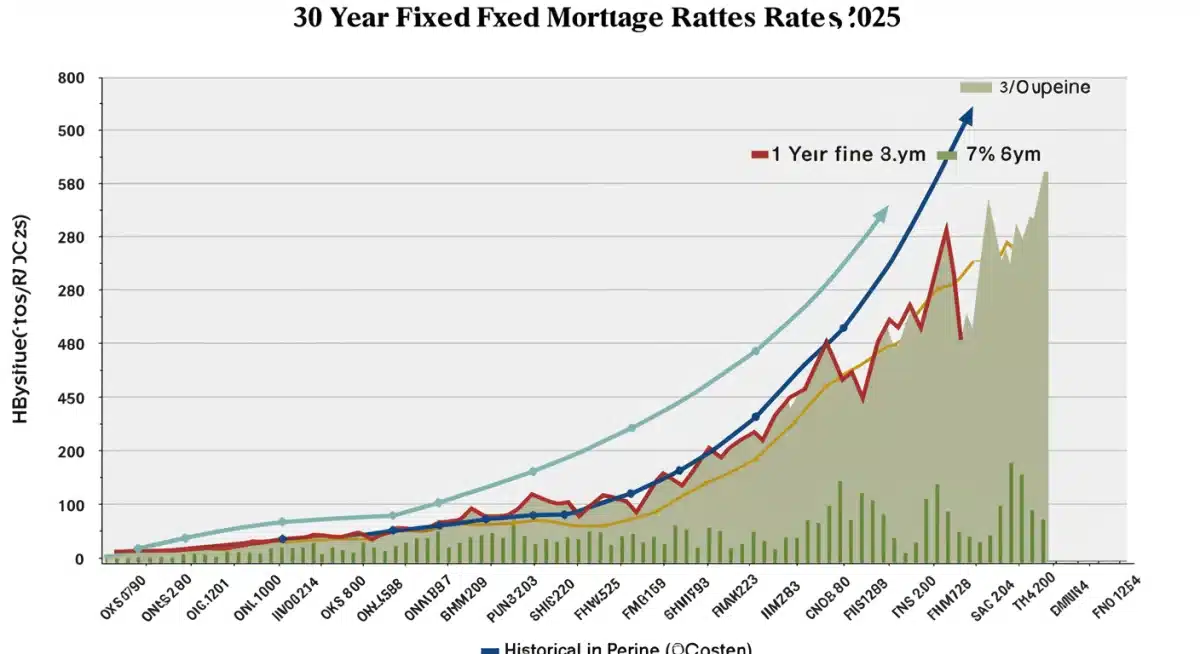
Furthermore, the demand side of the housing market will inevitably soften as fewer buyers can afford current prices and rates. This cooling effect could lead to a more balanced market, or even a buyer’s market in some regions, but it doesn’t necessarily make homes more affordable if interest rates continue to erode purchasing power. The delicate balance between home prices and interest rates will define affordability in 2025.
In summary, mortgage affordability in 2025 will be significantly constrained by 7% interest rates. This will necessitate greater financial discipline, potentially longer saving periods, and a strategic approach for all buyers to secure a home within their means.
Refinancing Opportunities and Considerations
While rising interest rates pose challenges for new buyers, they also reshape the landscape for existing homeowners considering refinancing. For those who secured mortgages at much lower rates (e.g., 2-4%), a 7% rate makes traditional rate-and-term refinancing largely unattractive. However, refinancing isn’t solely about securing a lower interest rate; it can be a strategic tool for various financial goals.
Homeowners with adjustable-rate mortgages (ARMs) may find themselves in a precarious position as their rates adjust upwards, potentially pushing their payments significantly higher. For these individuals, refinancing might still be a viable option, even at 7%, if their current rate is set to adjust to an even higher percentage or if they seek the stability of a fixed-rate loan.
Strategic Refinancing in a 7% Rate Environment
Even with current rates at 7%, certain refinancing strategies can still benefit homeowners:
- Cash-Out Refinance: Homeowners with significant equity can use a cash-out refinance to access funds for home improvements, debt consolidation, or other large expenses. While the new rate will be higher than their original, accessing equity at 7% might be preferable to other forms of high-interest debt (e.g., credit cards, personal loans).
- Debt Consolidation: Consolidating high-interest consumer debt into a lower-rate mortgage (even at 7%) can simplify finances and potentially reduce overall monthly payments, improving cash flow.
- Adjustable-Rate to Fixed-Rate: For those with ARMs whose introductory period is ending or whose rates are poised to jump, locking into a fixed rate at 7% offers payment stability and predictability, protecting against future rate spikes.
It’s crucial for homeowners to meticulously analyze their current financial situation, their long-term goals, and compare all available options. A detailed cost-benefit analysis, including closing costs and the total interest paid over the life of the loan, is essential before making a refinancing decision in a 7% rate environment.
Ultimately, refinancing opportunities in 2025 will be highly individualized. While the golden age of ultra-low rate refinancing may be behind us, strategic refinancing can still serve specific financial needs, particularly for those looking to tap into equity or stabilize payments from an ARM.
Regional Variations and Local Market Dynamics
The 2025 housing market forecast is not a monolithic entity; its effects will vary significantly across different regions and local markets within the United States. While national interest rates are a primary driver, local economic conditions, population trends, housing supply, and employment growth all play crucial roles in shaping specific market dynamics. What might be a challenging buyer’s market in one city could be a relatively stable one in another.
For instance, areas experiencing robust job growth and inward migration may see sustained demand, potentially offsetting some of the affordability challenges posed by higher interest rates. Conversely, regions with stagnant economies or an oversupply of housing might experience more pronounced price corrections or slower sales activity.
Key Factors Influencing Local Markets
Several factors contribute to the diverse regional outcomes:
- Job Market Strength: Strong local economies with growing employment opportunities attract residents, supporting housing demand and prices.
- Housing Supply: Areas with limited new construction or restrictive zoning policies often maintain higher prices despite interest rate hikes, due to persistent supply-demand imbalances.
- Population Trends: Influxes of new residents (e.g., from remote work migration) can keep demand high, while out-migration can lead to softer markets.
- Affordability Ratios: The existing ratio of median home prices to median incomes varies widely, making some markets inherently more susceptible to interest rate shocks than others.
It’s important for both buyers and sellers to look beyond national headlines and research the specific dynamics of their local market. A real estate agent with local expertise can provide invaluable insights into micro-market trends and potential opportunities or risks.
In conclusion, while 7% interest rates will cast a broad shadow over the 2025 housing market, the actual experience will be highly localized. Understanding these regional variations is key to navigating the market effectively, whether you’re buying, selling, or considering a refinance.
Government Policies and Economic Outlook
The 2025 housing market forecast will also be heavily influenced by ongoing government policies and the broader economic outlook. Federal Reserve decisions on interest rates, legislative actions related to housing, and fiscal policies designed to manage inflation or stimulate growth all have ripple effects that reach homeowners and potential buyers. Predicting these elements precisely is challenging, but understanding their potential impact is crucial for strategic planning.
For example, if inflation shows signs of cooling more rapidly than expected, the Federal Reserve might ease its stance on interest rates, potentially leading to a slight decrease in mortgage rates. Conversely, persistent inflation could necessitate further rate hikes, exacerbating affordability issues.
Potential Policy Interventions and Economic Indicators
Several areas of government activity and economic indicators warrant close observation:
- Federal Reserve Stance: The Fed’s dual mandate of maximizing employment and maintaining price stability will continue to dictate interest rate policy. Any shifts in their outlook on inflation or economic growth will directly affect borrowing costs.
- Housing Legislation: Potential government initiatives aimed at increasing housing supply, providing first-time buyer assistance, or regulating rental markets could alter local dynamics.
- Economic Growth & Employment: A strong economy with low unemployment generally supports housing demand, even at higher rates, as consumers feel more secure in their jobs and financial futures.
- Inflation Trends: The core inflation rate is a key metric. A sustained decline could signal a shift in monetary policy, while stubborn inflation could prolong the high-rate environment.
These macroeconomic factors are complex and interconnected, making the 2025 forecast inherently uncertain. However, staying informed about these broader trends allows individuals to anticipate potential shifts and adjust their housing strategies accordingly.
In essence, the interplay between government policy and the economic outlook will significantly shape the 2025 housing market. While individuals have little control over these macro forces, awareness can empower them to make more resilient financial decisions.
Strategies for Buyers and Sellers in 2025
Navigating the 2025 housing market, characterized by 7% interest rates, requires a thoughtful and adaptable strategy for both buyers and sellers. The days of frenzied bidding wars and automatic appreciation may be behind us, replaced by a more considered and negotiation-driven environment. Understanding these shifts is key to achieving successful outcomes.
For buyers, patience and financial preparedness will be paramount. For sellers, realistic pricing and an understanding of current buyer limitations will be essential. The market rewards those who are well-informed and willing to adjust their expectations.
Actionable Advice for Market Participants
Here are some strategies tailored for the 2025 market:
- For Buyers:
- Strengthen Your Finances: Focus on improving your credit score and saving a larger down payment to reduce loan amounts and secure better terms.
- Explore Loan Options: Investigate different mortgage products, including FHA, VA, or USDA loans, which may offer more favorable terms for eligible borrowers. Consider an ARM only if you have a clear plan to refinance or sell before the adjustment period.
- Be Patient and Persistent: The market may offer more inventory and less competition. Don’t rush; be prepared to make strong, well-researched offers.
- Consider a Rate Buydown: Ask sellers or lenders about temporary or permanent rate buydowns to reduce your initial interest rate.
- For Sellers:
- Price Realistically: Overpricing in a high-rate environment can lead to prolonged market time and eventual price reductions. Research comparable sales thoroughly.
- Enhance Property Appeal: Invest in minor repairs and staging to make your home stand out. Buyers are more discerning when borrowing costs are high.
- Be Open to Negotiations: Expect buyers to ask for concessions, such as closing cost credits or repairs. Flexibility can accelerate a sale.
- Understand Buyer Constraints: Recognize that buyers face higher monthly payments, which directly impacts their offer price.
Both parties should work closely with experienced real estate professionals and mortgage advisors. Their expertise will be invaluable in navigating the complexities of a market influenced by 7% interest rates, ensuring that decisions are grounded in current realities and future possibilities.
In conclusion, success in the 2025 housing market hinges on strategic planning, financial prudence, and an informed approach. Adapting to the new normal of higher interest rates will be the defining characteristic for both buyers and sellers.
| Key Aspect | Impact Summary |
|---|---|
| Interest Rates (7%) | Significantly increases monthly mortgage payments, reducing buyer purchasing power and affordability. |
| Mortgage Affordability | Challenging for first-time buyers; requires larger down payments or lower loan amounts. |
| Refinancing Opportunities | Limited for rate-and-term, but strategic for cash-out, debt consolidation, or ARM-to-fixed conversions. |
| Market Navigation | Buyers need patience and strong finances; sellers require realistic pricing and flexibility. |
Frequently Asked Questions
At 7% interest, your monthly mortgage payment will be substantially higher compared to rates below 5%. For example, a $300,000 loan at 7% would have a principal and interest payment of about $1,996, significantly more than the $1,265 at 3%. This directly impacts your overall affordability and the loan amount you can qualify for.
Yes, but the strategy shifts. While traditional rate-and-term refinancing might not offer a lower rate for many, a cash-out refinance could be viable to tap into equity for home improvements or debt consolidation. Converting an adjustable-rate mortgage (ARM) to a fixed 7% rate for stability is another strategic option.
First-time homebuyers should prioritize saving a larger down payment and improving their credit score. Exploring various loan programs like FHA or VA loans, which offer more flexible terms, can also be beneficial. Patience and a willingness to explore different property types or locations will be key to finding an affordable home.
While higher interest rates typically cool demand, leading to slower price appreciation or modest declines in some areas, significant across-the-board price crashes are less likely without a major economic downturn. Local market conditions, including supply and demand, will play a crucial role in determining specific price movements.
Homeowners with adjustable-rate mortgages should closely monitor their adjustment periods and consider refinancing to a fixed-rate loan if their current rate is poised to jump significantly. Building an emergency fund and maintaining a strong credit score also provide financial resilience against unexpected market shifts or personal financial challenges.
Conclusion
The 2025 housing market forecast is undoubtedly shaped by the prevailing interest rate environment, with rates around 7% presenting both challenges and opportunities. Mortgage affordability will remain a primary concern for prospective buyers, necessitating careful financial planning and a strategic approach to homeownership. For existing homeowners, refinancing will shift from a rate-reduction play to a tool for strategic financial management, such as accessing equity or stabilizing ARM payments. While national trends provide a broad overview, the nuances of local market dynamics, influenced by job growth, housing supply, and population shifts, will ultimately dictate individual experiences. Staying informed, adapting strategies, and consulting with financial and real estate professionals will be paramount for successfully navigating the complexities of the housing market in 2025.