2026 FAFSA Changes: Your Guide to Federal Student Aid

Navigating the 2026 FAFSA Changes: Essential Updates for Federal Student Aid Eligibility
The landscape of federal student financial aid is constantly evolving, and staying informed is paramount for students and families planning for higher education. As we look towards the 2026-2027 academic year, significant 2026 FAFSA Changes are on the horizon, promising to reshape how federal student aid is calculated and distributed. These updates, building upon the FAFSA Simplification Act, aim to streamline the application process, expand eligibility, and provide a more equitable approach to college funding. Understanding these modifications is not just beneficial; it’s crucial for maximizing your federal student aid opportunities and ensuring a smoother path to financing your education.
For decades, the Free Application for Federal Student Aid (FAFSA) has been the gateway to billions of dollars in grants, scholarships, work-study programs, and federal student loans. It’s the cornerstone of financial aid for millions of American students. However, the application process has often been perceived as complex and daunting. The upcoming 2026 FAFSA Changes are specifically designed to address these concerns, making the form more accessible and the aid determination process more transparent. This comprehensive guide will delve deep into what these changes entail, how they might affect your eligibility, and what steps you can take to prepare.
From a simplified application form to revised eligibility formulas, every aspect of federal student aid is subject to review. We’ll explore the shift from the Expected Family Contribution (EFC) to the Student Aid Index (SAI), the impact on Pell Grant eligibility, changes to how family farms and small businesses are assessed, and much more. Our goal is to equip you with the knowledge needed to confidently navigate these reforms and secure the financial support necessary for your academic pursuits. Let’s embark on this journey to demystify the 2026 FAFSA Changes and ensure you’re well-prepared for what’s ahead.
The FAFSA Simplification Act: A Foundation for Change
Before diving into the specifics of the 2026 FAFSA Changes, it’s essential to understand the legislative backbone supporting these reforms: the FAFSA Simplification Act. Enacted as part of the Consolidated Appropriations Act, 2021, this bipartisan legislation represents the most significant overhaul of the federal student aid system in decades. Its primary objectives are threefold: simplifying the FAFSA form, improving the Pell Grant program, and streamlining the student aid process.
The initial implementation of the FAFSA Simplification Act began with the 2024-2025 FAFSA cycle, introducing a redesigned form and some preliminary changes to aid calculations. However, many of the more substantial shifts, particularly those affecting eligibility and the calculation of need, are being phased in, with the 2026-2027 academic year marking a crucial period for their full realization. These phased implementations allow for careful adjustments and feedback, ensuring that the system is robust and effective when fully operational.
One of the most anticipated aspects of the FAFSA Simplification Act, and consequently the 2026 FAFSA Changes, is the replacement of the Expected Family Contribution (EFC) with the Student Aid Index (SAI). The EFC, a long-standing metric, has often been a source of confusion for families. The SAI aims to be a clearer indicator of a student’s financial need, calculated using a revised formula that considers a wider array of financial circumstances. This change is not merely semantic; it has profound implications for how much federal student aid a student may receive.
Furthermore, the Act seeks to expand Pell Grant eligibility by linking it to the federal poverty level and family size, potentially making more students from low-income backgrounds eligible for this foundational grant. It also addresses various other complexities, such as the treatment of child support, small business and farm assets, and the impact of federal tax benefits. By understanding the foundational principles of the FAFSA Simplification Act, students and families can better grasp the rationale behind the upcoming 2026 FAFSA Changes and how they are intended to create a more equitable and efficient financial aid system.
Key 2026 FAFSA Changes: From EFC to SAI
The transition from the Expected Family Contribution (EFC) to the Student Aid Index (SAI) is arguably the most significant of the 2026 FAFSA Changes. While both metrics serve to determine a student’s financial need, the SAI is designed to be a more direct and transparent assessment. The EFC could, at times, be a misleading figure, as it wasn’t always a direct indicator of what a family was expected to pay. The SAI, on the other hand, can be a negative number (down to -1500), indicating a higher level of financial need and potentially greater eligibility for federal aid.
Understanding the Student Aid Index (SAI)
The SAI calculation will incorporate several key adjustments:
- Elimination of the Number of Children in College Factor: Previously, the EFC formula divided parental income and assets by the number of children attending college. This often resulted in a lower EFC for families with multiple children in college simultaneously. Under the SAI, this factor is removed, meaning families with multiple children in college may see a higher SAI for each child, potentially reducing the amount of need-based aid they receive per student. This is a critical change for many families to consider as part of the 2026 FAFSA Changes.
- Changes to Income Protection Allowances: The income protection allowances, which shield a portion of a family’s income from being considered available for college costs, are being significantly increased. This means more of a family’s income will be protected, potentially leading to a lower SAI and increased eligibility for federal student aid, particularly for lower and middle-income families.
- Treatment of Child Support: Under the new rules, child support received will be reported as an asset, not as untaxed income. This adjustment could have varying impacts depending on the family’s overall financial situation, but for some, it may result in a lower SAI.
- Small Business and Farm Assets: One of the most long-awaited 2026 FAFSA Changes is the inclusion of the net worth of family farms and small businesses (those with fewer than 100 full-time employees) in the asset calculation. Previously, these assets were often excluded, leading to a perception of inequity. Their inclusion will likely increase the SAI for families who own such assets, potentially reducing their need-based aid eligibility. This is a significant shift that requires careful planning for affected families.
- Federal Tax Benefits: Certain federal tax benefits, such as the American Opportunity Tax Credit, will now also be included in the financial aid calculation. This could slightly increase the SAI for some families.
The shift to the SAI is designed to provide a more consistent and equitable measure of a student’s financial capacity. While some families may see a decrease in aid due to specific changes like the removal of the multi-student discount, others, particularly those with lower incomes, may find themselves eligible for more assistance due to increased income protection allowances. Understanding these nuances is key to preparing for the 2026 FAFSA Changes.
Expanded Pell Grant Eligibility and Other Grant Opportunities
Beyond the SAI, one of the most impactful 2026 FAFSA Changes pertains to the Federal Pell Grant program. The FAFSA Simplification Act introduces a more direct and expansive approach to determining Pell Grant eligibility, aiming to reach more students with significant financial need. This is a pivotal development, as Pell Grants do not need to be repaid and are often the foundation of a student’s financial aid package.
Automatic Pell Grant Eligibility
Under the new system, many students will become automatically eligible for a maximum Pell Grant based on their family size and income in relation to the federal poverty level. This significantly simplifies the process for the lowest-income families, providing a clear pathway to substantial federal student aid. The Department of Education will use federal tax information directly from the IRS to make these determinations, further streamlining the process and reducing the burden on applicants. This automatic eligibility is a major step towards making higher education more accessible for underserved populations.
Minimum Pell Grant Eligibility
Similarly, the 2026 FAFSA Changes will establish a minimum Pell Grant award for students whose SAI falls within a certain range above zero, but still demonstrates significant financial need. This ensures that even those who don’t qualify for the maximum award still receive some level of Pell Grant assistance, further broadening the program’s reach. The specific thresholds for maximum and minimum Pell Grant eligibility will be updated annually by the Department of Education, reflecting changes in the federal poverty guidelines.
These changes to Pell Grant eligibility are expected to benefit hundreds of thousands of additional students, providing them with crucial funding to pursue their educational goals. For families navigating the complexities of college costs, understanding these expanded opportunities is vital. It underscores the importance of completing the FAFSA, even if you believe you might not qualify, as the new formulas could surprise you.
It’s also worth noting that while Pell Grants are the most prominent federal grant, there are other federal and state grants available that often use FAFSA data for their eligibility determinations. The simplified FAFSA and expanded Pell Grant eligibility under the 2026 FAFSA Changes may indirectly open doors to these additional grant opportunities as well, making the FAFSA an even more critical tool for college financing.

Simplified Application Process and Data Sharing
Beyond the calculation methodologies, the 2026 FAFSA Changes also focus heavily on simplifying the application process itself. The aim is to reduce the time and effort required to complete the FAFSA, making it less of a barrier for prospective students and their families.
Fewer Questions, Easier Navigation
The redesigned FAFSA form will feature significantly fewer questions, reducing it from over 100 questions to approximately 36. This drastic reduction will make the form less intimidating and quicker to complete. Many questions that were previously redundant or could be obtained directly from federal tax data have been eliminated. This streamlined approach is a direct response to feedback from students and counselors who found the old FAFSA cumbersome and confusing.
Direct Data Exchange with the IRS (DDX)
Perhaps the most transformative of the procedural 2026 FAFSA Changes is the mandatory use of the Direct Data Exchange (DDX) with the IRS. Previously, applicants could manually input their tax information or use the IRS Data Retrieval Tool (DRT), which was optional. Now, all applicants, including parents and spouses where applicable, will be required to provide consent for the Department of Education to directly access their federal tax information from the IRS. This mandatory consent ensures accuracy, reduces errors, and significantly simplifies the income reporting section of the FAFSA.
This direct data exchange means that once consent is provided, many financial questions will be pre-filled, further reducing the burden on applicants. It also helps to prevent common mistakes that could delay the processing of a FAFSA. While the idea of mandatory data sharing might raise privacy concerns for some, the Department of Education has assured that robust security measures are in place to protect sensitive information.
Contributor Role
The concept of ‘contributors’ is also being formalized. A contributor is anyone required to provide information on the FAFSA form (e.g., the student, their spouse, a parent, or a stepparent). Each contributor will need to create their own Federal Student Aid (FSA) ID and provide consent for their tax data to be shared. This new structure aims to clarify who needs to provide what information and ensures that all necessary financial data is accurately and securely submitted.
These procedural 2026 FAFSA Changes are designed to make the application process more user-friendly and efficient, ultimately encouraging more students to apply for and receive the federal student aid they are entitled to. The reduction in questions and the mandatory direct data exchange are key components in this effort to simplify and modernize the FAFSA.
Impact on Specific Student Populations
The 2026 FAFSA Changes are not uniform in their impact; certain student populations will experience these reforms differently. Understanding these specific effects is vital for targeted advising and preparation.
Students with Divorced or Separated Parents
Under the old FAFSA, the custodial parent (the parent with whom the student lived for the majority of the time) was responsible for reporting their financial information. With the 2026 FAFSA Changes, the reporting parent will now be the parent who provides the most financial support to the student, regardless of where the student lives. This change could significantly alter the SAI for students whose parents have similar incomes but different living arrangements, or where the non-custodial parent provides the majority of financial support. This adjustment aims to reflect the actual financial contribution more accurately.
Students with Small Businesses or Family Farms
As mentioned earlier, the inclusion of the net worth of family farms and small businesses (with fewer than 100 full-time employees) as assets is a substantial change. Previously, these assets were often excluded, providing a financial advantage to families who owned them. Now, their value will be factored into the SAI calculation, which could lead to a higher SAI and reduced need-based aid for these families. This particular 2026 FAFSA Change has garnered significant attention and requires careful financial planning for affected families.
Homeless and Unaccompanied Youth
The FAFSA Simplification Act aims to improve support for homeless and unaccompanied youth. The changes clarify and expand the categories of individuals who can determine a student’s status as homeless or unaccompanied, such as school district homeless liaisons, directors of emergency shelters, and transitional housing programs. This makes it easier for these vulnerable students to receive independent student status, which can significantly increase their eligibility for federal student aid, including Pell Grants, by not requiring parental financial information.
Incarcerated Students
Another significant positive change is the restoration of Pell Grant eligibility for incarcerated individuals. This reversal of a decades-old ban will open doors to higher education for many who are incarcerated, providing opportunities for rehabilitation and improved societal reintegration. This particular 2026 FAFSA Change reflects a broader policy shift towards recognizing the transformative power of education, even within correctional facilities.
International Students and DACA Recipients
It’s important to clarify that the 2026 FAFSA Changes primarily apply to U.S. citizens, eligible non-citizens (such as permanent residents), and certain other qualified non-citizens. International students typically are not eligible for federal student aid. DACA (Deferred Action for Childhood Arrivals) recipients are also generally not eligible for federal student aid, though they may qualify for state or institutional aid in some states. The FAFSA Simplification Act does not alter these fundamental eligibility requirements based on citizenship status.
Preparing for the 2026 FAFSA Changes: A Proactive Approach
With such significant 2026 FAFSA Changes on the horizon, a proactive approach is essential for students and families to maximize their federal student aid opportunities. Here are key steps you can take to prepare:
1. Stay Informed and Monitor Updates
The financial aid landscape is dynamic. Regularly check the official Federal Student Aid website (StudentAid.gov) and your prospective colleges’ financial aid pages for the latest updates regarding the 2026 FAFSA Changes. Financial aid offices and high school guidance counselors are also excellent resources for current information.
2. Understand Your Financial Situation
Familiarize yourself with the new SAI calculation methodology. If you own a small business or a family farm, begin to understand how its net worth might impact your aid eligibility. If your parents are divorced or separated, discuss which parent provides the most financial support to ensure the correct parent completes the FAFSA. Knowing your financial standing relative to the new rules will help you anticipate your potential SAI.
3. Gather Necessary Documentation Early
Even with the streamlined process, you’ll still need specific documents. This includes federal tax information (though it will be directly retrieved from the IRS with consent, it’s good to have it on hand for reference), records of untaxed income, and information on assets (savings, checking accounts, investments). Having these ready will prevent delays once the FAFSA becomes available.
4. Create Your FSA ID (or Ensure It’s Active)
Every contributor (student, parent, spouse) will need an FSA ID to access the FAFSA online and sign it electronically. If you don’t have one, create it well in advance. If you have one, ensure you remember your username and password, as you’ll need it for the mandatory Direct Data Exchange (DDX).
5. File Early
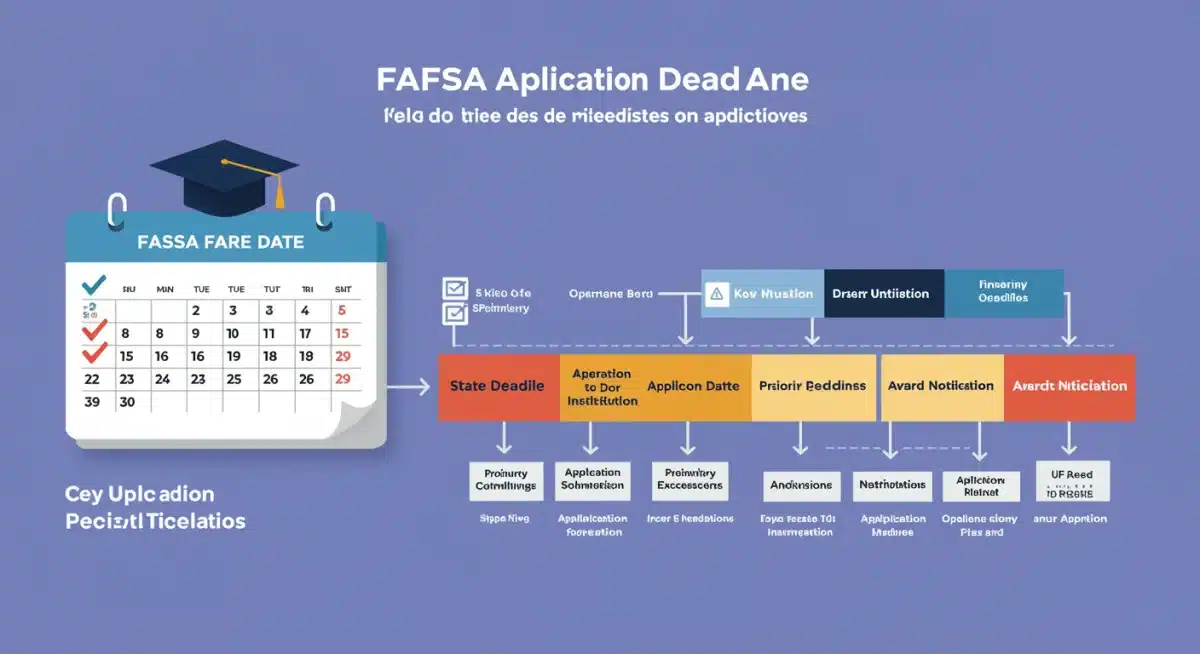
While the FAFSA filing window typically opens in October (or December for the initial rollout of the simplified FAFSA), many states and colleges have their own financial aid deadlines. Some aid is also awarded on a first-come, first-served basis. Filing as early as possible after the 2026-2027 FAFSA becomes available will give you the best chance to receive the maximum amount of aid for which you’re eligible.
6. Seek Professional Guidance
If you find the 2026 FAFSA Changes overwhelming, don’t hesitate to seek help. High school counselors, college financial aid advisors, and even private financial planners specializing in college funding can provide invaluable assistance in understanding your specific situation and navigating the application process.
7. Consider All Types of Aid
Remember that federal student aid is just one piece of the puzzle. Explore state aid programs, institutional scholarships, and private scholarships. Many of these also rely on FAFSA data, so a properly completed FAFSA is the first step towards unlocking a wider range of financial assistance.
By proactively addressing these areas, you can transform the potential challenges of the 2026 FAFSA Changes into opportunities, ensuring that financial barriers do not impede your educational aspirations.
Beyond Federal Aid: Holistic Financial Planning for College
While the 2026 FAFSA Changes are central to federal student aid, it’s crucial to remember that college financing is a multi-faceted endeavor. Federal aid, including grants, work-study, and loans, is a cornerstone, but it is often not sufficient to cover the entire cost of attendance. A holistic approach to financial planning for college involves exploring all available avenues and integrating them effectively.
State and Institutional Aid
Many states offer their own grant and scholarship programs, often utilizing FAFSA data as a primary eligibility criterion. Similarly, colleges and universities provide significant institutional aid, which can be need-based (requiring FAFSA and sometimes the CSS Profile) or merit-based (based on academic achievements, talents, or extracurriculars). Understanding how the 2026 FAFSA Changes might influence your eligibility for these non-federal programs is also important, as many use similar methodologies or simply require the FAFSA as a prerequisite.
Scholarships from Private Organizations
The world of private scholarships is vast and diverse. These can come from local community organizations, national foundations, corporations, and even small businesses. Unlike federal aid, private scholarships often have unique eligibility requirements that go beyond financial need, focusing on academic performance, specific majors, ethnic backgrounds, community service, or unique talents. Dedicating time to search and apply for these scholarships can significantly reduce your reliance on loans.
Education Savings Plans (529 Plans)
For families planning ahead, 529 college savings plans remain an excellent tool. Contributions grow tax-free, and withdrawals for qualified educational expenses are also tax-free. While 529 plan assets are reported on the FAFSA, they are generally treated favorably, with a minimal impact on aid eligibility compared to other assets. Understanding the long-term benefits of these plans, especially in light of the 2026 FAFSA Changes, can be crucial for future college funding.
Student Loans: Federal vs. Private
Even with grants and scholarships, many students will need to utilize loans. Federal student loans, such as Direct Subsidized and Unsubsidized Loans, are generally preferable to private loans due to their fixed interest rates, income-driven repayment options, and potential for deferment or forbearance. Private loans, offered by banks and other financial institutions, typically have fewer borrower protections and often require a co-signer. Always exhaust federal loan options before considering private loans.
Work-Study and Part-Time Jobs
Federal Work-Study programs allow students to earn money to help pay for educational expenses while gaining valuable work experience. For students not eligible for Work-Study, a part-time job can still contribute significantly to covering costs. Balancing work with academics requires careful planning but can be a sustainable way to manage expenses.
By integrating knowledge of the 2026 FAFSA Changes with a comprehensive understanding of all available funding sources, students and families can develop a robust financial plan that makes higher education an achievable reality.
Conclusion: Embracing the Future of Federal Student Aid
The 2026 FAFSA Changes represent a pivotal moment in the evolution of federal student aid. Born from the FAFSA Simplification Act, these reforms are designed to make the application process more accessible, equitable, and efficient for millions of students aspiring to higher education. From the momentous shift from EFC to SAI, with its revised calculation methodologies, to the expansion of Pell Grant eligibility, every aspect of these changes aims to streamline the path to financial assistance.
We’ve explored how the new Student Aid Index will be calculated, taking into account factors like the elimination of the multi-student discount, increased income protection allowances, and the inclusion of small business and farm assets. We’ve highlighted the crucial role of the Direct Data Exchange with the IRS in simplifying the application and ensuring accuracy. Furthermore, we’ve examined the specific impacts on diverse student populations, including those with divorced parents, small business owners, and homeless youth, underscoring the targeted nature of these reforms.
The overarching goal of the 2026 FAFSA Changes is to demystify the financial aid process, making it less of a barrier and more of a gateway to educational opportunities. While change can sometimes bring uncertainty, the core intent here is positive: to provide more students with the financial resources they need to pursue their academic dreams.
For students and families, the key to successfully navigating these updates lies in proactive engagement. Staying informed through official channels, understanding your personal financial situation in light of the new rules, gathering necessary documentation early, and filing the FAFSA promptly are all critical steps. Do not underestimate the power of an early and accurate application, as it can unlock a wider array of federal, state, and institutional aid.
Ultimately, the 2026 FAFSA Changes are not merely bureaucratic adjustments; they are a reaffirmation of the commitment to making higher education attainable for all. By embracing these changes and preparing diligently, you can ensure that you are well-positioned to take full advantage of the federal student aid available, paving the way for a brighter academic and professional future. Education is an investment, and these reforms are designed to help you make that investment a reality.