5G National Coverage: Revolutionizing Connectivity by 2026

5G National Coverage: Revolutionizing Connectivity by Mid-2026
The dawn of a new era in connectivity is upon us. By mid-2026, projections indicate that 5G national coverage will reach an astounding 85%. This isn’t just a number; it’s a monumental leap forward in how we interact with technology, conduct business, and experience the world. The implications of such widespread, high-speed, low-latency connectivity are profound, promising to reshape industries, redefine daily life, and unlock unprecedented opportunities.
For years, 5G has been a buzzword, a promise of a faster, more efficient wireless future. Now, that future is rapidly becoming a reality. The aggressive rollout of 5G infrastructure, driven by fierce competition among telecommunication giants and supported by governmental initiatives, is paving the way for a truly connected society. This article will delve deep into what 85% 5G national coverage means for various sectors, the challenges that remain, and the exciting prospects that lie ahead.
Understanding the Significance of 85% 5G National Coverage
Achieving 85% 5G national coverage is a critical milestone that moves 5G from a niche, urban-centric technology to a ubiquitous utility. This level of penetration ensures that the vast majority of the population, including those in suburban and many rural areas, will have access to 5G’s transformative capabilities. But what exactly does this mean for the average user and for industries?
Speed and Latency: The Core Advantages
The most commonly cited benefits of 5G are its incredible speeds and ultra-low latency. With theoretical peak speeds of up to 10 gigabits per second (Gbps) and real-world averages significantly higher than 4G LTE, downloading large files, streaming 8K video, and engaging in graphically intensive online gaming will become virtually instantaneous. More importantly, latency – the delay before a transfer of data begins following an instruction – will drop to as low as 1 millisecond (ms). This near real-time communication is not just about faster browsing; it’s the foundation for entirely new applications and services that were previously impossible.
Enhanced Capacity and Connectivity Density
Beyond speed and latency, 5G networks are designed to handle a significantly higher volume of connected devices simultaneously. This ‘capacity’ is crucial for the proliferation of the Internet of Things (IoT), where billions of devices, from smart home appliances to industrial sensors, will constantly communicate with each other and the cloud. With 85% 5G national coverage, the network will be able to support this massive influx of data traffic without degradation in performance, ensuring reliable connectivity for a truly smart ecosystem.
Impact on Key Industries: A Paradigm Shift
The widespread availability of 5G national coverage will act as a catalyst for innovation across a multitude of industries. From healthcare to manufacturing, education to entertainment, every sector stands to benefit from enhanced connectivity.
Healthcare: Remote Care and Precision Medicine
In healthcare, 5G will enable revolutionary advancements. Remote surgeries, where a surgeon can operate on a patient miles away with virtually no lag, become a reality. Telemedicine will evolve beyond simple video calls to include high-fidelity diagnostics and real-time monitoring of vital signs from connected medical devices. Emergency services can leverage 5G for faster data transmission from ambulances, allowing hospitals to prepare for incoming patients more effectively. The ability to collect and analyze vast amounts of health data in real-time will also accelerate precision medicine, tailoring treatments to individual patient profiles.
Manufacturing and Industry 4.0: The Smart Factory
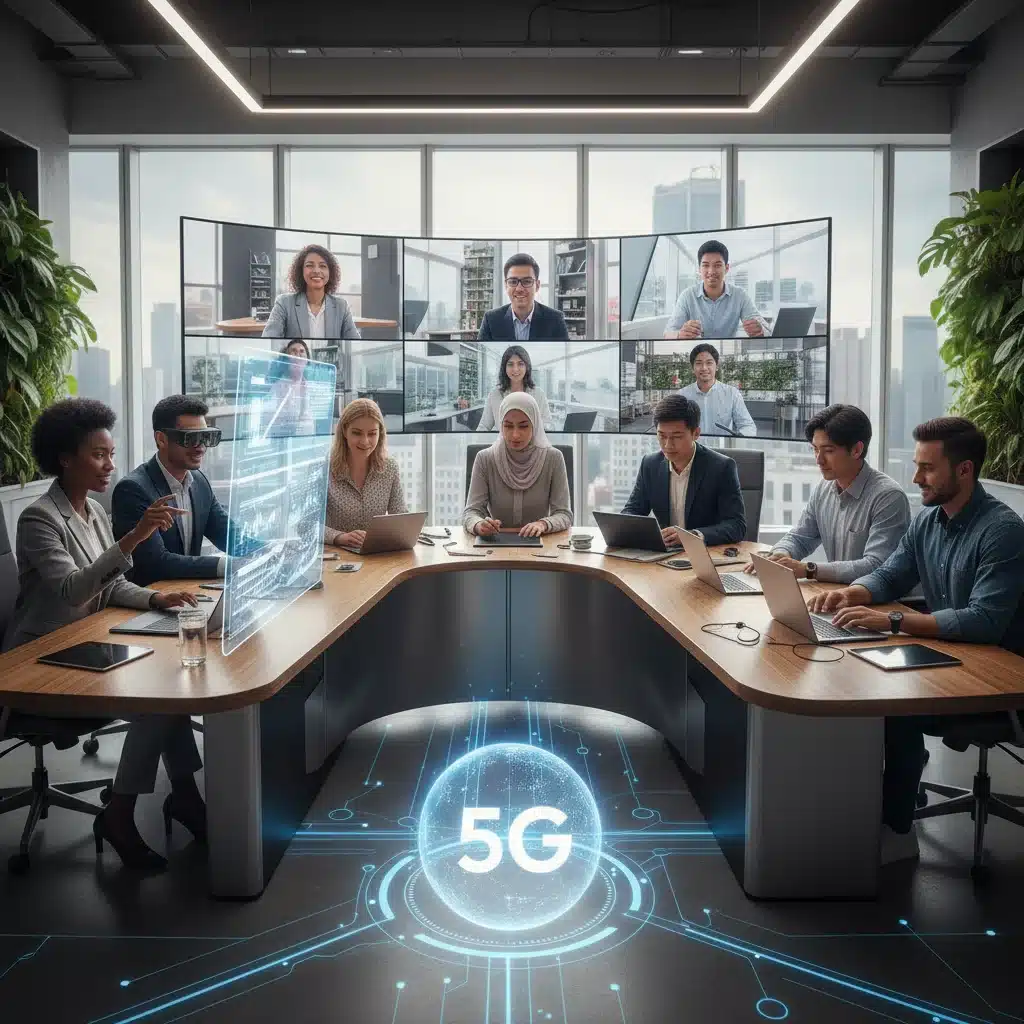
For manufacturing, 5G is the backbone of Industry 4.0. Smart factories, powered by 5G, will feature highly automated production lines, predictive maintenance systems, and real-time inventory management. Industrial IoT (IIoT) sensors will monitor every aspect of the manufacturing process, allowing for immediate adjustments and optimizing efficiency. Augmented Reality (AR) and Virtual Reality (VR) will assist workers with complex tasks, training, and remote collaboration. The low latency of 5G is critical here, ensuring that critical control signals are transmitted without delay, preventing costly errors and improving safety.
Transportation and Logistics: Connected Vehicles and Smart Cities
The automotive industry is poised for a massive transformation with 5G national coverage. Connected vehicles will communicate with each other (V2V), with infrastructure (V2I), and with pedestrians (V2P), creating a safer and more efficient transportation ecosystem. This real-time data exchange is fundamental for autonomous driving, enabling vehicles to perceive their surroundings and navigate complex environments with unprecedented accuracy. Smart cities will leverage 5G for intelligent traffic management, smart parking systems, and enhanced public safety through connected surveillance and emergency response systems.
Education: Immersive Learning and Remote Access
Education will also see significant changes. Immersive learning experiences through VR and AR will become commonplace, bringing subjects to life in ways previously unimaginable. Remote learning, already accelerated by recent global events, will be enhanced with seamless high-definition video conferencing and access to rich digital resources, bridging geographical divides and making quality education more accessible to all. 5G national coverage ensures that students in various locations can participate equally, fostering a more inclusive learning environment.
Entertainment and Media: Next-Gen Experiences
Consumers will experience entertainment in entirely new ways. High-resolution streaming, cloud gaming with no discernible lag, and truly immersive VR/AR experiences will become the norm. Live events can be broadcast with multiple camera angles and interactive elements, giving viewers unprecedented control over their experience. The media industry will benefit from faster content creation and distribution workflows, allowing for quicker turnaround times and more dynamic content delivery.
Challenges and Considerations for Widespread 5G Adoption
While the prospect of 85% 5G national coverage is exciting, the journey is not without its challenges. Addressing these hurdles is crucial for realizing the full potential of this technology.
Infrastructure Deployment and Cost
The deployment of 5G infrastructure is a massive undertaking, requiring significant capital investment. Unlike previous generations of cellular technology, 5G often relies on a denser network of smaller cell sites, particularly for millimeter-wave (mmWave) frequencies that offer the highest speeds but have shorter ranges. This means installing thousands of new antennas and base stations, which can be costly and time-consuming, especially in rural or hard-to-reach areas. Overcoming these logistical and financial challenges is key to achieving true 5G national coverage.
Spectrum Availability and Allocation
Effective 5G deployment depends heavily on the availability and efficient allocation of radio spectrum. Different frequency bands offer different characteristics – low-band for wide coverage, mid-band for a balance of speed and coverage, and high-band (mmWave) for ultra-fast speeds in dense areas. Governments and regulatory bodies play a crucial role in ensuring that sufficient spectrum is auctioned and allocated to carriers in a timely and fair manner to support robust 5G national coverage.
Security and Privacy Concerns
As more devices become connected and more data flows across 5G networks, security and privacy become paramount concerns. The expanded attack surface created by billions of IoT devices necessitates robust cybersecurity measures. Protecting sensitive personal and industrial data from breaches and ensuring the integrity of critical infrastructure are ongoing challenges that require continuous innovation and collaboration between technology providers, governments, and users. The widespread adoption facilitated by 5G national coverage amplifies these concerns, demanding proactive solutions.
Digital Divide and Equitable Access
Even with 85% 5G national coverage, there remains a risk of exacerbating the digital divide. While urban and suburban areas will likely enjoy robust 5G services, ensuring equitable access for all, particularly in remote rural communities, is a persistent challenge. Affordability of 5G devices and data plans also plays a significant role. Efforts must be made to ensure that the benefits of 5G are accessible to everyone, preventing a two-tiered society where some are left behind due to lack of connectivity or financial constraints.

The Road Ahead: What to Expect Post-2026
Reaching 85% 5G national coverage by mid-2026 is not the finish line, but rather a significant milestone on a continuing journey of technological evolution. What can we expect in the years that follow?
Optimization and Maturation of Services
Once widespread coverage is established, the focus will shift towards optimizing the network and maturing the services built upon it. This includes fine-tuning network performance, enhancing reliability, and developing more sophisticated applications that fully leverage 5G’s capabilities. We will see an explosion of innovative services, particularly in areas like edge computing, where data processing occurs closer to the source, further reducing latency and enabling even more responsive applications.
The Rise of 5G Advanced and Beyond
Even as 5G becomes ubiquitous, research and development for its successors are already underway. 5G Advanced (also known as 5G-A or 5.5G) is the next evolution, promising further enhancements in speed, capacity, and intelligence, laying the groundwork for 6G. These future iterations will continue to push the boundaries of what’s possible, enabling even more immersive experiences, hyper-connected environments, and intelligent automation.
Societal and Economic Transformation
The full societal and economic impact of widespread 5G national coverage will unfold over many years. It is expected to drive significant economic growth by fostering new industries, creating jobs, and increasing productivity across sectors. Societally, it will enable more seamless communication, enhance public services, and potentially reduce disparities by providing access to information and opportunities that were previously out of reach.
Preparing for a 5G-Enabled Future
As 5G national coverage becomes a widespread reality, individuals, businesses, and governments need to prepare for this transformative shift. For consumers, this means considering 5G-enabled devices and exploring new services that leverage the network’s capabilities. For businesses, it involves strategizing how 5G can enhance operations, create new products, and improve customer experiences. Governments must continue to support infrastructure development, ensure fair competition, and address regulatory challenges.
For Individuals: Embracing the Connected Lifestyle
Individuals will find their daily lives increasingly intertwined with 5G. From smarter homes and personal health monitoring to enhanced entertainment and more flexible work-from-anywhere options, the connected lifestyle will become the norm. Understanding how to leverage these technologies responsibly and securely will be important.
For Businesses: Innovation and Competitive Advantage
Businesses that embrace 5G early will gain a significant competitive advantage. This involves investing in 5G-compatible infrastructure, developing new business models that capitalize on low latency and high bandwidth, and training employees to utilize these new tools effectively. The ability to collect, analyze, and act on real-time data will be a powerful differentiator.
For Governments: Policy and Infrastructure Investment
Governments have a critical role in facilitating the 5G revolution. This includes fostering a favorable regulatory environment, investing in critical infrastructure, and promoting digital literacy. Policies that encourage competition, ensure cybersecurity, and address the digital divide will be essential for maximizing the benefits of 5G national coverage for all citizens.
Conclusion: The Era of Pervasive 5G Connectivity
The projection of 85% 5G national coverage by mid-2026 marks a pivotal moment in the evolution of global connectivity. It signifies the transition from an emerging technology to a foundational utility that will underpin the next wave of digital transformation. The promises of ultra-fast speeds, minimal latency, and massive connectivity density are no longer distant dreams but rapidly approaching realities that will fundamentally alter industries, enhance daily experiences, and unlock a future brimming with innovation.
While challenges in deployment, security, and equitable access persist, the momentum behind 5G deployment is undeniable. As we move beyond this significant milestone, the focus will shift towards optimizing networks, developing advanced applications, and exploring the next generations of wireless technology. The era of pervasive 5G connectivity is here, and its impact will resonate across every facet of our lives for decades to come, ushering in an unprecedented age of digital possibilities.