
Federal Budget 2027: Key Votes and Economic Impact Analysis
As September 2026 approaches, the political landscape is buzzing with anticipation and strategic maneuvering. The reason? The crucial legislative watch on the upcoming key votes for the Federal Budget 2027. This isn’t just another procedural step; it’s a pivotal moment that will shape the nation’s economic trajectory, influence social programs, and define governmental priorities for the next fiscal year. Understanding the intricacies of these votes, the underlying economic forecasts, and the diverse perspectives of stakeholders is essential for citizens, businesses, and policymakers alike.
The federal budget is more than just a financial document; it’s a reflection of national values and a blueprint for future prosperity. It allocates resources across a vast array of sectors, from defense and education to healthcare and infrastructure. Every line item, every appropriation, carries significant weight, impacting millions of lives and countless industries. The upcoming votes in September 2026 will determine how these resources are distributed, potentially setting the stage for either robust growth or significant belt-tightening. Our deep dive into the Federal Budget 2027 aims to provide a comprehensive overview, shedding light on the challenges and opportunities that lie ahead.
The Road to September 2026: A Legislative Timeline
The journey to the final budget votes is a long and complex one, typically spanning several months of intense negotiations, committee hearings, and political debates. For the Federal Budget 2027, this process began much earlier, with various government agencies submitting their funding requests, followed by the executive branch’s proposal. This proposal then undergoes rigorous scrutiny by legislative bodies, primarily the House of Representatives and the Senate, each with their own committees dedicated to appropriations and budget matters.
Leading up to September 2026, several key milestones will have already occurred:
- President’s Budget Request: Typically submitted in early 2026, outlining the administration’s spending priorities and revenue projections.
- Congressional Budget Resolutions: Both the House and Senate will have passed their own budget resolutions, setting overall spending limits and revenue targets. These resolutions are non-binding but provide a framework for subsequent appropriations bills.
- Appropriations Bills: These are the specific bills that allocate money to individual government agencies and programs. There are usually 12 major appropriations bills, covering different areas like defense, agriculture, labor, and health. Each of these bills must pass through committee and then be approved by both chambers.
- Conference Committees: If the House and Senate pass different versions of an appropriations bill, a conference committee is formed to reconcile the differences and produce a compromise bill that both chambers can approve.
The votes scheduled for September 2026 are likely the final, crucial steps in this legislative marathon. These votes will either finalize the individual appropriations bills or, in some cases, result in a comprehensive omnibus spending bill if individual bills fail to pass. The stakes are incredibly high, as failure to pass a budget by the start of the fiscal year (October 1st) can lead to government shutdowns, with significant repercussions for public services and the economy.
Economic Projections and the Federal Budget 2027
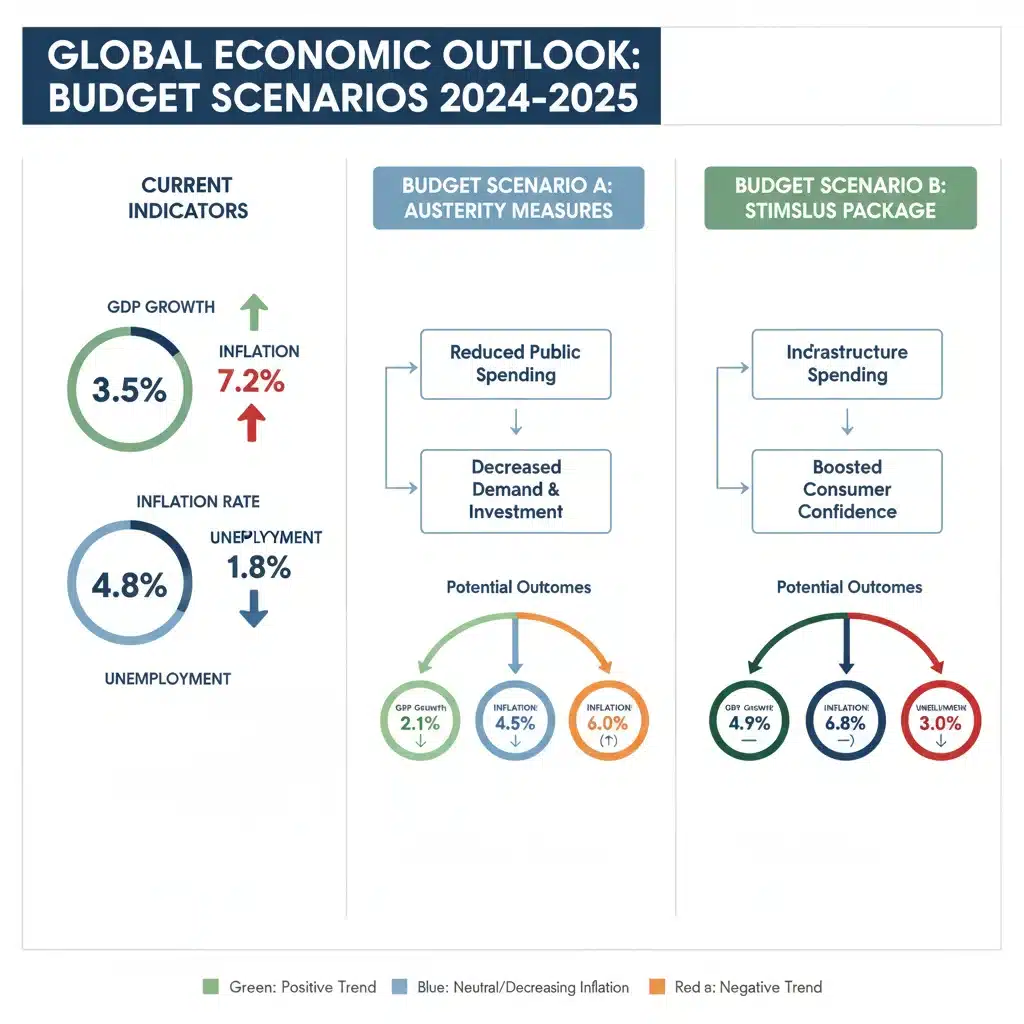
The backdrop against which the Federal Budget 2027 is being debated is a complex and evolving economic landscape. Economic projections play a critical role in shaping budget decisions, influencing revenue forecasts, and justifying spending levels. Analysts are closely watching several key indicators, including:
- GDP Growth: The expected rate of economic expansion directly impacts tax revenues. Higher growth generally means more tax receipts, providing greater flexibility for spending.
- Inflation: Persistent inflation can erode the purchasing power of government spending and increase the cost of goods and services the government procures. It also influences interest rates on national debt.
- Unemployment Rates: Low unemployment can lead to higher tax revenues and reduced demand for social safety net programs, while high unemployment can strain government resources.
- Interest Rates: Rising interest rates increase the cost of servicing the national debt, which is a significant and growing portion of the federal budget.
- Global Economic Outlook: International trade, geopolitical stability, and global supply chains profoundly impact domestic economic performance and, by extension, the federal budget.
Current economic forecasts for 2027 suggest a period of cautious optimism, though significant uncertainties remain. Supply chain issues, geopolitical tensions, and the ongoing recovery from global health crises continue to pose challenges. The budget will need to strike a delicate balance between stimulating economic growth, managing national debt, and addressing pressing social needs.
One of the primary economic debates revolves around the national debt. With the national debt continuing to climb, there’s increasing pressure to rein in spending. However, proponents of robust government investment argue that spending on infrastructure, research and development, and education can yield long-term economic benefits, ultimately boosting productivity and tax revenues. The Federal Budget 2027 will reflect the outcome of these competing philosophies.
Key Areas of Focus in the Federal Budget 2027
While the specific details of the Federal Budget 2027 are still being finalized, several key areas are consistently at the forefront of legislative discussions and public interest. These sectors often represent significant portions of federal spending and have far-reaching implications.
Defense Spending
Defense remains a cornerstone of the federal budget. Debates often center on the balance between maintaining a strong military, investing in new technologies, and managing global security challenges. The 2027 budget will likely reflect ongoing geopolitical realities, with potential increases in certain areas like cybersecurity and advanced weaponry, while other traditional defense programs might face scrutiny.
Healthcare and Social Programs
Healthcare expenditures, including Medicare, Medicaid, and the Affordable Care Act, constitute a substantial part of federal spending. The aging population and rising healthcare costs present ongoing challenges. The Federal Budget 2027 will likely address these pressures, with potential reforms or adjustments to existing programs. Similarly, social security and other social safety net programs will be a key focus, with discussions on their long-term solvency and adequacy.
Education and Research
Investment in education, from early childhood to higher education, and funding for scientific research are critical for long-term economic competitiveness. The budget will determine the level of federal support for schools, student aid programs, and key research initiatives across various scientific fields. Expect debates around funding for STEM (Science, Technology, Engineering, and Mathematics) education and climate change research.
Infrastructure and Climate Initiatives
With increasing awareness of climate change and the need for modern infrastructure, these areas are receiving significant attention. The Federal Budget 2027 is expected to include substantial allocations for upgrading roads, bridges, public transit, and broadband internet. Furthermore, investments in renewable energy, climate resilience projects, and environmental protection are likely to be prominent.
Political Dynamics and Stakeholder Perspectives
The legislative process for the Federal Budget 2027 is inherently political, driven by competing ideologies, regional interests, and the demands of various stakeholder groups. The September 2026 votes will be the culmination of months of intense lobbying and negotiation.
Congressional Divisions
The composition of Congress – whether one party controls both chambers or if there’s a divided government – significantly impacts the ease with which a budget can pass. Bipartisan cooperation is often necessary, but it can be elusive, leading to stalemates and last-minute compromises. Different factions within each party also hold sway, pushing for their priorities, which can further complicate the process.
Lobbying and Advocacy Groups
Numerous interest groups actively lobby Congress to advocate for funding in their specific sectors. From defense contractors and pharmaceutical companies to environmental organizations and educational associations, these groups play a significant role in shaping the budget. Their influence can be seen in the inclusion or exclusion of specific programs and funding levels.
Public Opinion and Constituents
Ultimately, legislators are accountable to their constituents. Public opinion on key spending priorities, such as healthcare, education, or tax policies, can significantly influence how representatives vote. Town hall meetings, public surveys, and constituent communications all contribute to the political pressure on lawmakers as they deliberate on the Federal Budget 2027.
Potential Outcomes and Their Implications
As September 2026 approaches, there are several possible outcomes for the Federal Budget 2027, each with distinct implications for the nation.
Timely Passage of Appropriations Bills
The ideal scenario involves the timely passage of all individual appropriations bills, or a consolidated omnibus bill, before the start of the fiscal year on October 1st. This outcome provides stability and predictability, allowing government agencies to plan effectively and ensuring continuity of services. It signals legislative efficiency and often reflects a degree of bipartisan consensus.
Continuing Resolutions (CRs)
If Congress cannot agree on a final budget by the deadline, they may pass a Continuing Resolution (CR). A CR temporarily funds the government at previous spending levels, usually for a few weeks or months. While CRs prevent a government shutdown, they often hinder long-term planning for agencies and can lead to inefficiencies. Extended use of CRs can be detrimental to government operations and strategic initiatives.
Government Shutdown
The most disruptive outcome is a government shutdown, which occurs if no budget or CR is passed by the October 1st deadline. During a shutdown, non-essential government services cease, federal employees are furloughed, and various programs can be delayed or halted. Shutdowns have significant economic costs, erode public trust, and can create widespread uncertainty. The pressure to avoid such an event is immense, making the September 2026 votes even more critical.

Impact on Key Sectors and the Average Citizen
The decisions made regarding the Federal Budget 2027 will ripple through every sector of the economy and directly affect the lives of ordinary citizens. Understanding these impacts is crucial for anticipating changes and planning accordingly.
Businesses and Industries
Businesses, particularly those that contract with the government or operate in heavily regulated sectors, are keenly watching the budget process. Funding levels for research and development, defense procurement, infrastructure projects, and regulatory agencies can significantly impact their operations and profitability. Changes in tax policy, which are often part of budget negotiations, can also affect corporate earnings and investment decisions.
For example, increased spending on green energy initiatives could create new opportunities for companies in renewable energy and sustainable technologies. Conversely, cuts to specific programs could lead to reduced demand for certain goods and services, affecting businesses reliant on those sectors. The predictability of government funding is often as important as the funding itself, so a smooth budget process is generally preferred by the business community.
Public Services and Social Programs
The most direct impact for many citizens will be on public services and social programs. Funding for schools, public health initiatives, environmental protection, disaster relief, and social safety nets like food assistance and housing support are all determined by the budget. Cuts in these areas can lead to reduced services, longer wait times, and increased hardship for vulnerable populations. Conversely, increased funding can enhance the quality and accessibility of these vital programs, improving overall societal well-being.
Healthcare access and affordability are perennial concerns. The Federal Budget 2027 will shape the future of programs like Medicare and Medicaid, impacting seniors, low-income families, and individuals with disabilities. Decisions on prescription drug pricing, hospital reimbursements, and public health campaigns will have tangible effects on millions.
Individual Finances and Taxation
While the federal budget primarily deals with government spending, it often includes provisions related to taxation. Changes in income tax rates, corporate tax rates, deductions, and credits can directly affect individual disposable income and household budgets. For instance, tax cuts might stimulate consumer spending, while tax increases could reduce it. The budget may also influence interest rates, which in turn impact borrowing costs for mortgages, car loans, and student debt.
Furthermore, the overall economic climate shaped by the budget can affect job security and wage growth. A budget that fosters economic stability and growth is generally beneficial for individual finances, while one that leads to uncertainty or recession can have adverse effects.
Global Standing and International Relations
Beyond domestic impacts, the Federal Budget 2027 also has implications for the nation’s global standing and international relations. Funding for foreign aid, diplomatic missions, and international alliances reflects the country’s commitment to global leadership and humanitarian efforts. Defense spending, in particular, signals military capabilities and strategic priorities to allies and adversaries alike. Cuts or increases in these areas can alter global perceptions and influence international partnerships.
Looking Ahead: The Post-Vote Landscape
Once the votes for the Federal Budget 2027 are cast in September 2026, the real work of implementation begins. Government agencies will then have a clear mandate and allocated resources to execute their programs and initiatives for the upcoming fiscal year. However, the budget process doesn’t truly end there. Oversight committees will monitor spending, conduct audits, and ensure that funds are used efficiently and effectively.
Moreover, the budget passed in September 2026 will serve as the baseline for future federal budgets. Decisions made now will have long-term consequences, influencing subsequent fiscal years and potentially locking in certain spending patterns or policy directions. This continuity underscores the importance of thoughtful and responsible budgeting.
The debates and compromises that lead to the final budget also reveal the evolving priorities of the nation. They highlight areas of consensus and persistent disagreement among political factions and the public. As new challenges arise – whether economic downturns, natural disasters, or geopolitical shifts – the flexibility and foresight built into the budget will be critical for the nation’s ability to respond effectively.
Conclusion
The upcoming legislative watch on the key votes for the Federal Budget 2027 in September 2026 represents a critical juncture for the nation. These decisions will not only determine how taxpayer money is spent but also set the course for economic growth, social welfare, and national security. From the intricate web of economic projections to the intense political dynamics and the diverse perspectives of stakeholders, every aspect contributes to a process that is as complex as it is consequential.
Citizens, businesses, and policymakers alike have a vested interest in understanding the nuances of this budget. It is a document that reflects the choices a nation makes about its future, balancing immediate needs with long-term aspirations. As we move closer to September 2026, staying informed and engaged with the budget process will be paramount for everyone seeking to understand and influence the direction of the country.
The Federal Budget 2027 is more than just numbers; it’s a statement of intent, a commitment to certain values, and a roadmap for the challenges and opportunities that lie ahead. Its passage, or lack thereof, will have lasting repercussions, making the September 2026 votes some of the most anticipated and significant legislative events of the year.