Medicare Part D Changes 2025: Save Up to $2,000 on Prescriptions

The 2025 Medicare Part D changes introduce significant reforms aimed at reducing out-of-pocket prescription drug costs, with beneficiaries potentially saving up to $2,000 annually through new caps and restructured coverage phases.
Understanding the Latest Medicare Part D Changes for 2025: How to Save Up to $2,000 Annually on Prescriptions is crucial for millions of Americans. These upcoming modifications promise to reshape how beneficiaries access and pay for their vital medications, potentially leading to substantial financial relief.
The Evolution of Medicare Part D: A Brief Overview
Medicare Part D, established in 2006, revolutionized prescription drug coverage for Medicare beneficiaries. Before its inception, many seniors struggled with the high costs of medications, often having to choose between essential drugs and other necessities. Part D aimed to bridge this gap by offering various plans from private insurance companies, approved by Medicare, to help cover prescription costs.
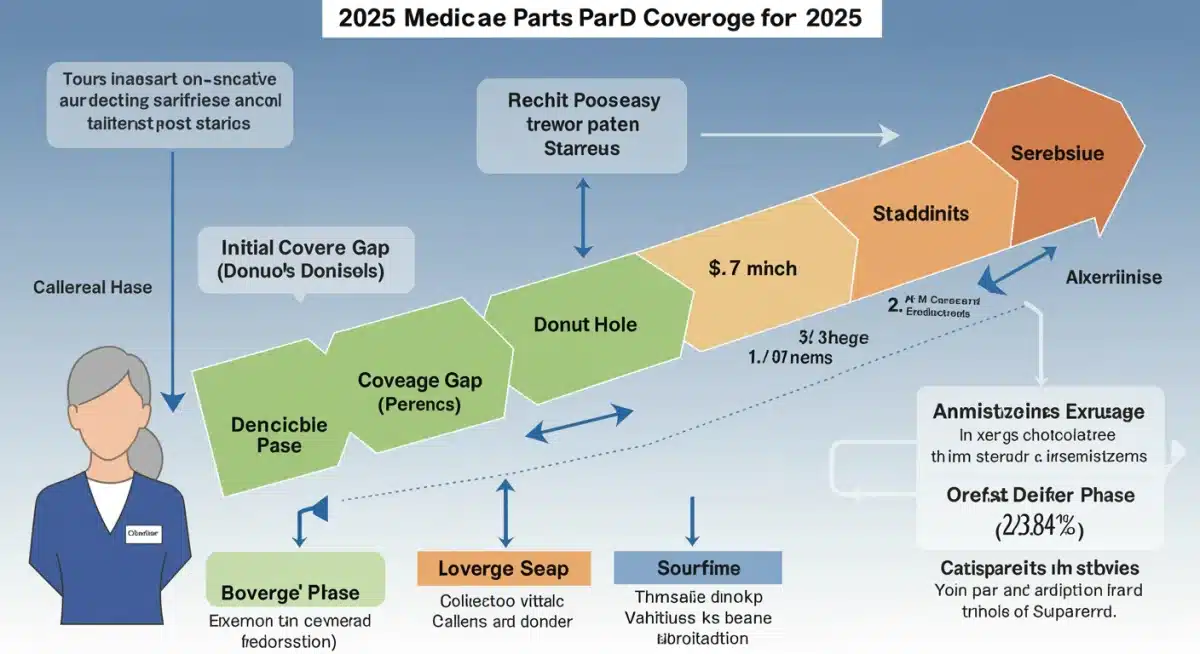
Over the years, Part D has undergone several adjustments, reflecting changes in healthcare costs, pharmaceutical advancements, and policy priorities. These modifications often aim to balance affordability for beneficiaries with the sustainability of the program. The framework typically includes a deductible, an initial coverage phase, a coverage gap (often called the ‘donut hole’), and catastrophic coverage. Each phase dictates the percentage of drug costs beneficiaries are responsible for, creating a complex landscape that requires careful navigation.
The upcoming changes for 2025 are among the most significant since the program’s inception. They stem from legislative efforts to further reduce out-of-pocket expenses and streamline the coverage process, making it more predictable for beneficiaries. These reforms are designed to address long-standing concerns about the escalating costs of prescription drugs and the financial burden placed on individuals, particularly those with chronic conditions requiring expensive medications.
Key Changes to Medicare Part D in 2025: What You Need to Know
The year 2025 marks a pivotal moment for Medicare Part D, introducing changes that will profoundly impact beneficiaries’ out-of-pocket spending on prescription drugs. These reforms are primarily driven by the Inflation Reduction Act (IRA) of 2022, which sought to lower drug costs and improve access to essential medications. Understanding these specific adjustments is critical for effective financial planning and maximizing benefits.
Out-of-Pocket Spending Cap Implementation
Perhaps the most significant change is the introduction of a $2,000 annual cap on out-of-pocket prescription drug costs. This means that once a beneficiary spends $2,000 on covered medications within a calendar year, they will pay nothing for any subsequent covered prescriptions for the remainder of that year. This cap is a game-changer, especially for individuals with high drug costs, as it provides a definitive ceiling on their financial liability.
- Financial Relief: The $2,000 cap offers unprecedented financial protection, preventing catastrophic spending on medications.
- Predictability: Beneficiaries will have a clearer understanding of their maximum annual drug expenses, aiding budget management.
- Impact on High-Cost Users: This change will particularly benefit those with chronic illnesses or conditions requiring expensive specialty drugs.
This cap will replace the previous system where beneficiaries continued to pay 5% of their drug costs even after reaching the catastrophic coverage phase, which could still amount to thousands of dollars. The elimination of this 5% coinsurance is a direct benefit of the new legislation, ensuring that once the $2,000 threshold is met, the financial burden is lifted completely.
Impact on Coverage Phases: Deductible, Initial Coverage, and Catastrophic Coverage
The 2025 changes also bring adjustments to the various phases of Medicare Part D coverage, further enhancing affordability and simplifying the structure. While the basic framework of deductible, initial coverage, and catastrophic coverage remains, the financial responsibilities within each phase are being redefined.
Elimination of the Coverage Gap (Donut Hole) Phase
The infamous ‘donut hole,’ or coverage gap, has been a source of confusion and financial strain for many beneficiaries. While efforts have been made in recent years to close this gap, 2025 will see its complete elimination in terms of beneficiary out-of-pocket costs for generic drugs. For brand-name drugs, manufacturers will continue to provide discounts, and plans will cover a larger portion, effectively making the gap less impactful for beneficiaries.
The new structure ensures that once the deductible is met, beneficiaries move directly from the initial coverage phase to the catastrophic phase when their total out-of-pocket spending reaches the $2,000 cap. This streamlined progression removes the complex calculations and unexpected costs often associated with the coverage gap, offering a more straightforward and predictable experience.
- Simpler Navigation: The direct transition simplifies understanding of coverage.
- Reduced Burden: Beneficiaries will no longer face the significant cost-sharing previously associated with the coverage gap.
- Increased Access: This change can encourage better adherence to medication regimens by reducing financial barriers.
These adjustments are designed to provide a more consistent and affordable experience throughout the year, ensuring that individuals can access their necessary medications without facing unexpected financial hurdles as they progress through their benefit year.
How Beneficiaries Can Save Up to $2,000 Annually
The promise of saving up to $2,000 annually on prescription drug costs is a significant draw of the 2025 Medicare Part D changes. This potential saving primarily stems from the new out-of-pocket spending cap, which provides a concrete limit on what beneficiaries will pay each year. For individuals currently spending more than $2,000 out-of-pocket, the savings will be direct and substantial.
Consider a beneficiary who, under the old system, might have spent $5,000 annually on prescription drugs after meeting their deductible and navigating the coverage gap. With the 2025 changes, their maximum out-of-pocket cost will be capped at $2,000. This represents a direct saving of $3,000 in this hypothetical scenario. While the maximum potential saving is $2,000 compared to previous years’ averages, many individuals with high drug costs will see even greater reductions in their personal spending.
Strategies for Maximizing Savings
- Review Your Plan Annually: Even with the new cap, comparing Part D plans during the annual enrollment period remains crucial. Plans vary in premiums, deductibles, and formularies (lists of covered drugs).
- Utilize Generics: Whenever possible, opt for generic versions of your medications, as they typically have lower co-pays and contribute to reaching the $2,000 cap more slowly, allowing your plan to cover more costs initially.
- Check Formularies: Ensure your preferred pharmacy is in-network and your essential medications are on your plan’s formulary to avoid unexpected costs.
The key to realizing these savings lies in understanding how your specific drug costs interact with the new cap and selecting a plan that best suits your individual needs. The cap acts as a safety net, but proactive plan selection can still optimize your overall drug spending.
Navigating Plan Selection and Enrollment for 2025
Even with the significant improvements to Medicare Part D in 2025, the process of selecting the right plan remains a critical step for beneficiaries. While the $2,000 out-of-pocket cap provides a universal benefit, other factors such as monthly premiums, deductibles, and specific drug formularies will continue to vary among plans offered by private insurers.
The annual enrollment period, typically from October 15 to December 7, is the opportune time to review and change your Part D plan. During this period, all plans announce their updated benefits, costs, and formularies for the upcoming year. It is essential to not only consider the new spending cap but also to evaluate how your current medications are covered under different plans.
Important Considerations for Plan Selection
- Drug Formulary: Verify that all your prescribed medications are on the plan’s formulary, and note their tier level, as this affects co-payment amounts.
- Monthly Premiums: While some plans have low or no premiums, they might have higher deductibles or co-pays for certain drugs.
- Pharmacy Network: Check if your preferred pharmacy is part of the plan’s network to avoid higher out-of-network costs.
- Extra Help Eligibility: Individuals with limited income and resources may qualify for Extra Help, a Medicare program that helps pay for Part D premiums, deductibles, and co-payments.
Online tools like the Medicare Plan Finder on Medicare.gov will be updated to reflect the 2025 changes, making it easier for beneficiaries to compare plans side-by-side. Engaging with this tool or consulting a trusted Medicare advisor can help ensure you select a plan that maximizes your savings under the new regulations.
Beyond the Cap: Additional Benefits and Support Programs
While the $2,000 out-of-pocket cap is a cornerstone of the 2025 Medicare Part D reforms, beneficiaries should also be aware of other provisions and support programs that can further reduce their prescription drug costs. The Inflation Reduction Act included several other measures aimed at enhancing affordability and access, which complement the out-of-pocket spending limit.
One notable aspect is the continued focus on insulin costs. Building on previous reforms, the IRA maintains the $35 cap on a month’s supply of insulin for Medicare beneficiaries, regardless of their plan or coverage phase. This ensures that a vital medication for millions of Americans remains affordable and accessible, preventing financial barriers to necessary treatment.
Other Avenues for Cost Reduction
- Vaccine Coverage: Most adult vaccines recommended by the Advisory Committee on Immunization Practices (ACIP) will be covered with no cost-sharing under Medicare Part D, improving access to preventative care.
- Extra Help Program: The Low-Income Subsidy (LIS) program, also known as Extra Help, is expanding in 2024 and beyond. More beneficiaries with incomes up to 150% of the federal poverty level will qualify for full subsidies, further reducing their Part D costs.
- Drug Price Negotiation: While the full effects will be phased in over several years, Medicare will have the ability to negotiate prices for certain high-cost drugs, potentially leading to lower overall costs for both beneficiaries and the program in the long run.
These additional benefits, combined with the out-of-pocket cap, create a comprehensive safety net designed to make prescription drugs more affordable and predictable for all Medicare Part D beneficiaries. Staying informed about these various support mechanisms is key to optimizing your healthcare spending.
Preparing for 2025: Actions to Take Now
With the 2025 Medicare Part D changes on the horizon, proactive preparation can ensure you fully benefit from the new regulations. Waiting until the last minute might mean missing out on significant savings or choosing a plan that isn’t optimally suited for your needs. Now is the time to start gathering information and assessing your current situation.
Begin by reviewing your current prescription drug usage and costs. Make a list of all your medications, their dosages, and how often you refill them. This will be invaluable when comparing plans and understanding how the new $2,000 cap will affect your personal spending. If you have chronic conditions requiring expensive drugs, pay particular attention to these costs, as they are where the largest savings are likely to occur.
Steps for Proactive Planning
- Gather Your Medication List: Compile an accurate list of all your prescriptions, including generic and brand names.
- Estimate Current Costs: Review your Explanation of Benefits (EOB) statements from your current Part D plan to understand your annual out-of-pocket spending.
- Consult Medicare Resources: Utilize Medicare.gov and other official resources for the most up-to-date information on the 2025 changes.
- Seek Expert Advice: Consider talking to a SHIP (State Health Insurance Assistance Program) counselor or a trusted financial advisor specializing in Medicare for personalized guidance.
By taking these steps, you can approach the 2025 changes with confidence, ensuring you are well-informed and prepared to make choices that will maximize your savings and maintain access to the medications you need. The goal is to leverage these reforms to potentially save up to $2,000 annually, thereby significantly reducing your healthcare burden.
| Key Change | Brief Description |
|---|---|
| $2,000 Out-of-Pocket Cap | Beneficiaries will pay a maximum of $2,000 annually for covered prescription drugs. |
| Eliminated 5% Coinsurance | No more 5% coinsurance in the catastrophic phase after hitting the cap. |
| Simplified Coverage Gap | The ‘donut hole’ is effectively closed for beneficiaries, leading to more predictable costs. |
| Expanded Extra Help | More low-income individuals will qualify for full subsidies, reducing Part D costs. |
Frequently Asked Questions About Medicare Part D 2025
The most significant change is the implementation of a $2,000 annual out-of-pocket spending cap for covered prescription drugs. Once beneficiaries reach this limit, they will not pay any further costs for their medications for the rest of the year, offering substantial financial relief.
The $2,000 out-of-pocket cap directly limits your annual spending. If your medication costs previously exceeded this amount, you will now save the difference. For example, if you spent $3,500, you’ll save $1,500. Comparing plans and using generics can further maximize savings.
Effectively, no. While the coverage gap phase technically remains, beneficiaries’ out-of-pocket costs within this phase are significantly reduced or eliminated due to manufacturer discounts and plan contributions, leading to a direct transition to catastrophic coverage once the deductible is met and the cap is approached.
While the reforms aim to reduce out-of-pocket drug costs, individual plan premiums may still vary based on the specific plan chosen and its benefits. It’s crucial to review plan options during the annual enrollment period to understand premium adjustments and overall costs.
You should review your current medications and annual spending, compare available Part D plans during the annual enrollment period (October 15 – December 7), and utilize resources like Medicare.gov’s Plan Finder or consult with a SHIP counselor to select the best plan for your needs.
Conclusion
The upcoming Medicare Part D changes for 2025 represent a significant step forward in making essential prescription medications more affordable and accessible for millions of Americans. With the introduction of a $2,000 annual out-of-pocket spending cap and the effective elimination of the catastrophic coverage coinsurance, beneficiaries can anticipate substantial financial relief, potentially saving up to $2,000 annually. These reforms, alongside expanded Extra Help and capped insulin costs, underscore a deepened commitment to protecting individuals from the burden of high drug prices. Proactive engagement with plan selection and leveraging available resources will be key to maximizing these benefits and ensuring a healthier, more financially secure future.