Education Reform 2026: Department of Education Initiatives
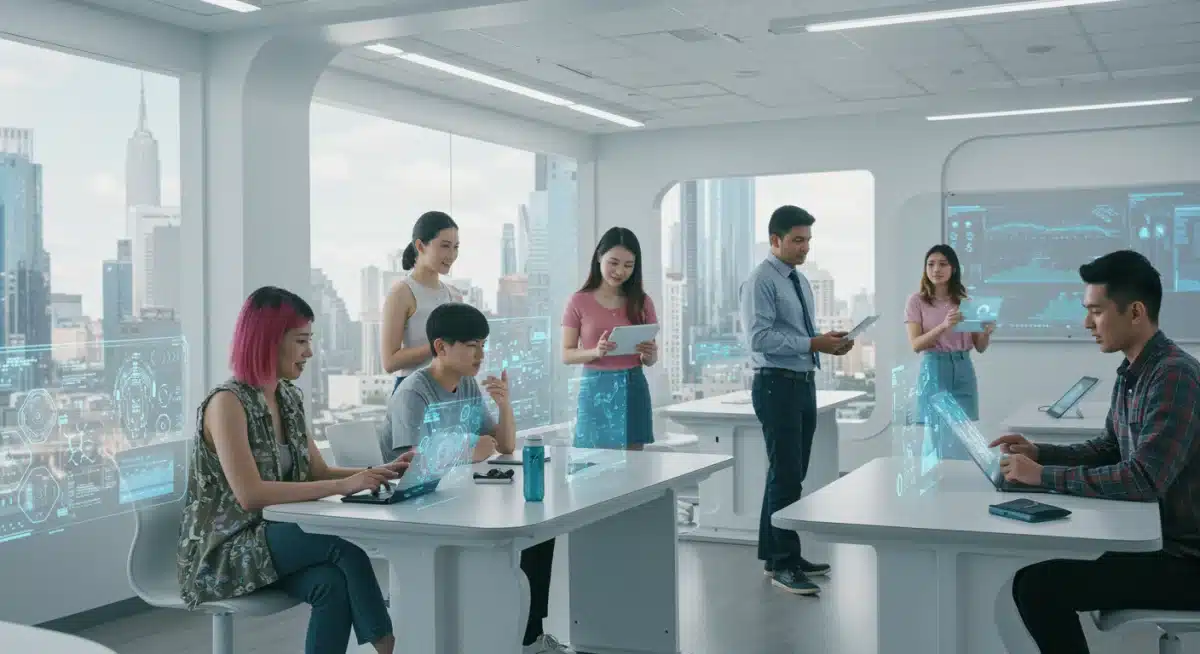
The Department of Education’s 2026 initiatives aim to revolutionize schooling by integrating technology, fostering personalized learning, and ensuring equitable opportunities for all students across the United States.
As the landscape of learning continuously evolves, the United States Department of Education has unveiled its ambitious plan for 2026, setting a new course for American schooling. This comprehensive strategy, dubbed education reform 2026, outlines key initiatives designed to address contemporary educational challenges and prepare students for a rapidly changing world. It’s a pivotal moment for educators, students, and parents alike, promising significant shifts in curriculum, technology integration, and student support systems.
Paving the Way for Digital Inclusion and Literacy
The digital divide has long been a critical concern in American education, and the Department of Education’s 2026 initiatives place a strong emphasis on bridging this gap. This section explores how expanded access to technology and comprehensive digital literacy programs are set to become cornerstones of the new educational framework.
Ensuring every student has access to reliable internet and appropriate learning devices is no longer a luxury but a fundamental right. The Department plans to collaborate with state and local governments, as well as private sector partners, to roll out nationwide infrastructure improvements and device distribution programs. This will ensure that learning can continue seamlessly, whether in the classroom or at home, fostering a more resilient and adaptable educational ecosystem.
Universal Access to Learning Technologies
The goal is simple yet profound: no student left behind due to lack of technological resources. This involves not only providing hardware but also ensuring robust technical support and training for both students and educators. The initiatives aim to create a level playing field where every child can engage with digital content and tools effectively.
- Expansion of broadband internet access in underserved communities.
- Provision of personal learning devices for all K-12 students.
- Development of localized tech support hubs for schools.
Beyond access, the reforms will also focus on fostering genuine digital literacy. This means moving beyond basic computer skills to encompass critical thinking about online information, understanding digital citizenship, and developing computational thinking skills essential for future careers. The curriculum will be updated to reflect these needs, integrating digital literacy across various subjects rather than treating it as a standalone topic.
The Department believes that by prioritizing digital inclusion and literacy, it can empower a new generation of learners who are not just consumers of technology, but creators and innovators. This foundational shift is crucial for maintaining America’s competitive edge in a globalized, technology-driven economy.
Rethinking Curriculum for 21st-Century Skills
The traditional curriculum, while foundational, often struggles to keep pace with the rapid advancements in technology and societal needs. The 2026 education reform addresses this by proposing a significant overhaul of what and how students learn, emphasizing skills vital for the future workforce and engaged citizenship.
A core tenet of the new curriculum will be a stronger focus on critical thinking, problem-solving, creativity, and collaboration. These are not merely buzzwords but essential competencies that transcend specific disciplines. Educators will be encouraged to design project-based learning experiences that allow students to apply knowledge in real-world contexts, fostering deeper understanding and practical skills.
Emphasis on STEAM and Interdisciplinary Learning
Science, Technology, Engineering, Arts, and Mathematics (STEAM) will receive increased attention, with initiatives promoting interdisciplinary approaches. This means connecting subjects that have traditionally been taught in isolation, such as integrating art and design into engineering projects or using mathematical concepts to analyze scientific data. The aim is to make learning more relevant and engaging.
- Development of new STEAM curricula guidelines.
- Funding for specialized STEAM programs and teacher training.
- Promotion of hands-on, inquiry-based learning in all subjects.
Furthermore, there will be a renewed focus on civics education, financial literacy, and environmental sustainability. These areas are deemed crucial for developing well-rounded individuals who can contribute meaningfully to their communities and navigate complex global challenges. The curriculum updates will be flexible, allowing states and districts to tailor content to local needs while adhering to national standards for core competencies.
The Department envisions a curriculum that not only imparts knowledge but also cultivates a lifelong love of learning and equips students with the adaptability needed to thrive in an unpredictable future. This forward-looking approach is paramount to the success of the 2026 reforms.
Personalized Learning Pathways and Student Well-being
Recognizing that every student learns differently, the 2026 initiatives champion personalized learning pathways, leveraging technology and data to tailor educational experiences. This approach aims to maximize individual potential while also placing significant emphasis on student mental and emotional well-being.
Personalized learning involves using adaptive software, AI-driven assessment tools, and individualized educational plans to meet students where they are. This allows for customized pacing, content, and instructional methods, ensuring that advanced students are challenged and those needing extra support receive it promptly. The goal is to move away from a one-size-fits-all model towards a more dynamic and responsive system.

Integrated Support for Mental Health
Beyond academic personalization, the reforms prioritize the holistic development of students, with a strong focus on mental health and social-emotional learning (SEL). Schools will receive increased funding and resources to expand access to counselors, psychologists, and social workers. SEL programs will be integrated into the daily curriculum, teaching students self-awareness, self-management, social awareness, relationship skills, and responsible decision-making.
- Implementation of adaptive learning platforms across districts.
- Increased funding for school-based mental health services.
- Mandatory professional development for educators in SEL.
The Department understands that academic success is intrinsically linked to a student’s overall well-being. By fostering a supportive and inclusive school environment, these initiatives aim to reduce stress, improve student engagement, and create conditions conducive to optimal learning. This comprehensive approach ensures that students are not only academically prepared but also emotionally resilient and socially competent.
The integration of personalized learning with robust well-being support represents a paradigm shift, recognizing the complex interplay of factors that contribute to a child’s educational journey and future success.
Empowering Educators: Professional Development and Support
No education reform can succeed without the dedicated and well-supported efforts of its educators. The Department of Education’s 2026 plan includes significant investments in professional development, mentorship programs, and initiatives designed to attract and retain high-quality teachers.
The reforms acknowledge that teachers are at the forefront of implementing these new strategies. Therefore, extensive training will be provided on integrating new technologies, facilitating personalized learning, and effectively teaching 21st-century skills. This professional development will be ongoing, responsive to educator feedback, and tailored to meet the diverse needs of different school environments.
Attracting and Retaining Top Talent
To address teacher shortages and improve overall quality, the initiatives propose innovative recruitment strategies, including scholarships for aspiring teachers, loan forgiveness programs, and partnerships with universities to streamline teacher preparation. Furthermore, efforts will be made to create more supportive working conditions, reduce administrative burdens, and offer competitive salaries and benefits.
- Enhanced professional development in digital pedagogy and SEL.
- Mentorship programs for new and experienced teachers.
- Incentives for teachers in high-need subject areas and underserved communities.
The Department also plans to foster collaborative professional learning communities where educators can share best practices, problem-solve together, and continuously refine their craft. This emphasis on continuous learning and mutual support aims to elevate the teaching profession and ensure that every classroom is led by a highly skilled and motivated individual. Investing in educators is seen as an investment in the future of every student.
By empowering teachers with the tools, training, and support they need, the 2026 education reform seeks to create a ripple effect, improving instructional quality and student outcomes across the nation.
Promoting Equity and Accessibility in Education
Equity has always been a cornerstone of American education, and the 2026 reforms intensify efforts to ensure that every student, regardless of their background or location, has access to a high-quality education. This involves targeted interventions for marginalized groups and a commitment to inclusive practices.
The initiatives will focus on dismantling systemic barriers that disproportionately affect students from low-income families, racial and ethnic minorities, students with disabilities, and English language learners. This includes re-evaluating funding formulas to direct more resources to schools serving these populations, as well as implementing culturally responsive teaching practices.
Support for Students with Special Needs
For students with disabilities, the reforms underscore the importance of individualized education programs (IEPs) that are truly tailored to their unique needs, ensuring access to appropriate accommodations, assistive technologies, and specialized instruction. There will be increased training for general education teachers on inclusive practices, fostering environments where all students can thrive together.
- Increased funding for schools in low-income areas.
- Development of culturally responsive curriculum resources.
- Enhanced support and resources for English language learners.
Furthermore, the Department aims to reduce disparities in disciplinary actions, ensuring that school discipline policies are fair, restorative, and do not disproportionately impact certain student groups. The goal is to create safe and welcoming school climates where every student feels valued and supported. By addressing these long-standing inequities, the 2026 education reform seeks to unlock the full potential of every child in America.
The commitment to equity and accessibility permeates every aspect of the reform, reflecting a belief that a truly excellent education system is one that serves all its learners with dignity and respect.
Community Engagement and Parental Involvement
A successful education system extends beyond the classroom walls, deeply involving parents, families, and the wider community. The 2026 initiatives recognize this vital connection and outline strategies to strengthen partnerships between schools and their communities.
The Department plans to launch programs that facilitate greater parental involvement in their children’s education, moving beyond traditional parent-teacher conferences. This includes workshops on supporting learning at home, improved communication channels between schools and families, and opportunities for parents to contribute to school governance and decision-making processes.
Building Stronger School-Community Ties
Schools will be encouraged to become true community hubs, offering resources and services that benefit not just students but also their families. This could include after-school programs, adult education classes, health services, and food assistance programs, all integrated into the school environment. The aim is to create a holistic support system that addresses various needs of the community.
- Development of family literacy and learning programs.
- Establishment of community advisory councils for schools.
- Utilization of school facilities for broader community services.
Collaboration with local businesses, non-profit organizations, and higher education institutions will also be a key focus. These partnerships can provide students with valuable real-world experiences, mentorship opportunities, and pathways to future careers or further education. By fostering a sense of shared responsibility for student success, the 2026 education reform aims to create stronger, more vibrant learning ecosystems.
Engaging the entire community ensures that education is not an isolated endeavor but a shared journey, enriching the lives of students and strengthening the fabric of society as a whole.
| Key Initiative | Brief Description |
|---|---|
| Digital Inclusion | Ensuring universal access to technology and comprehensive digital literacy for all students. |
| Curriculum Modernization | Overhauling curriculum to focus on 21st-century skills, STEAM, and interdisciplinary learning. |
| Personalized Learning | Tailoring educational experiences and integrating strong mental health and social-emotional support. |
| Educator Empowerment | Investing in professional development, recruitment, and retention of high-quality teachers. |
Frequently Asked Questions About Education Reform 2026
The primary goal is to modernize American education by focusing on digital inclusion, 21st-century skills, personalized learning, and equitable access for all students, preparing them for a dynamic future.
The initiatives include expanding broadband internet in underserved areas, providing personal learning devices, and establishing local tech support hubs to ensure universal access and digital literacy.
The curriculum will emphasize critical thinking, problem-solving, and STEAM subjects, integrating interdisciplinary approaches and focusing on civics, financial literacy, and environmental sustainability.
Increased funding for school counselors and psychologists, along with integrated social-emotional learning (SEL) programs, will prioritize student well-being and create supportive school environments.
The Department plans to strengthen partnerships through enhanced parental involvement programs, community advisory councils, and by positioning schools as hubs for broader family and community services.
Conclusion
The Department of Education’s outlined initiatives for 2026 represent a bold and necessary step towards a more robust, equitable, and future-ready educational system in the United States. By focusing on digital inclusion, a modernized curriculum, personalized learning, empowered educators, and strong community ties, these reforms aim to address long-standing challenges and equip every student with the skills and support needed to thrive. The success of this ambitious plan will ultimately depend on collaborative efforts from all stakeholders, ensuring that the promise of a brighter educational future becomes a reality for all.