Emergency Fund Planning 2026: 6 Months of Financial Security
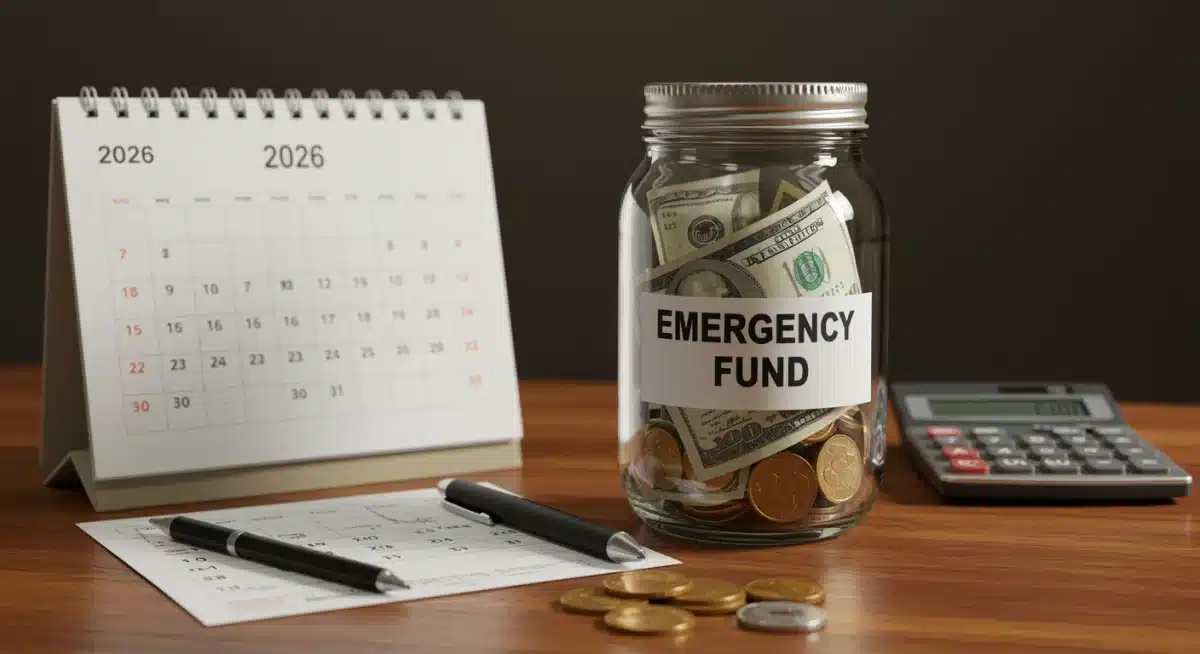
Emergency fund planning for 2026 involves strategically setting aside at least six months’ worth of essential living expenses to create a financial safety net, protecting against unexpected job loss, medical emergencies, or other significant disruptions.
In an ever-evolving economic landscape, the foresight to establish a robust financial safety net has never been more critical. Emergency fund planning for 2026: Building 6 months of living expenses for financial security stands as a cornerstone of personal financial resilience, offering peace of mind amidst life’s inevitable uncertainties. This proactive approach ensures you are well-prepared for any unforeseen challenges that may arise.
Understanding the imperative of an emergency fund in 2026
The year 2026 brings its own unique set of economic considerations, from potential market fluctuations to evolving job markets. An emergency fund is not merely a savings account; it’s a strategic buffer designed to absorb financial shocks without derailing your long-term goals or accumulating debt. It’s about protecting your financial well-being and maintaining stability when life throws unexpected curveballs.
Building an emergency fund is a proactive step that empowers individuals to navigate periods of unemployment, unexpected medical bills, or major home repairs without undue stress. It shifts the narrative from reactive crisis management to proactive financial readiness. This foundational element of personal finance allows you to make decisions from a position of strength, rather than desperation.
Why 6 months of living expenses?
The recommendation for six months of living expenses is a widely accepted benchmark, offering a substantial cushion for most households. This duration provides ample time to recover from job loss, manage significant health events, or address other emergencies without depleting all savings or incurring high-interest debt.
- Job security: Six months allows for a reasonable job search period, especially in specialized fields.
- Health emergencies: Covers deductibles, co-pays, and lost income during recovery.
- Unexpected repairs: Funds for car breakdowns, home maintenance, or appliance replacements.
- Economic volatility: Provides stability during periods of economic uncertainty or downturns.
While some financial advisors suggest three months for dual-income households with stable jobs, and others recommend up to twelve months for those with irregular income or high-risk careers, six months strikes a practical balance for most. This target provides a robust defense against common financial disruptions, offering significant psychological and practical benefits.
Ultimately, the specific amount needed can vary based on individual circumstances, including job stability, health status, and family obligations. However, aiming for six months provides a solid, adaptable foundation for financial security in 2026.
Assessing your current financial situation for 2026
Before you can effectively build your emergency fund, a clear and honest assessment of your current financial standing is paramount. This involves a meticulous review of your income, expenses, debts, and existing savings. It’s not just about knowing how much money you have, but understanding where it goes and how efficiently it’s being utilized.
Start by gathering all relevant financial documents: bank statements, credit card bills, loan statements, and pay stubs. This comprehensive overview will illuminate your financial habits and highlight areas where adjustments can be made. This process might seem daunting initially, but it’s a crucial first step towards gaining control over your financial future.
Calculating essential monthly living expenses
The core of your emergency fund target is an accurate calculation of your essential monthly living expenses. This is not about your total spending, but rather the bare minimum required to maintain your household if your income were to suddenly cease. Differentiating between needs and wants is critical here.

List all fixed expenses that are non-negotiable, such as rent or mortgage payments, utility bills, insurance premiums, and loan repayments. Then, consider variable but essential expenses like groceries, transportation, and basic healthcare. Exclude discretionary spending like dining out, entertainment, and luxury purchases.
- Housing: Rent/mortgage, property taxes, home insurance.
- Utilities: Electricity, water, gas, internet (essential for remote work).
- Food: Groceries for home cooking, avoiding restaurant meals.
- Transportation: Car payments, fuel, public transport, car insurance.
- Healthcare: Insurance premiums, essential prescriptions, co-pays.
- Minimum debt payments: Credit card minimums, student loan minimums.
Once you have a clear figure for your essential monthly expenses, multiply it by six to determine your target emergency fund amount. This figure provides a concrete goal to work towards, grounding your financial planning in realistic numbers. Regularly reviewing these expenses ensures your emergency fund remains aligned with your current lifestyle and financial needs.
Strategies for rapidly building your emergency fund
Once you have calculated your target amount, the next step is to implement effective strategies to build your emergency fund quickly and efficiently. This often requires a combination of increasing income and reducing expenses, alongside disciplined savings habits. The key is consistency and a clear focus on your financial goal.
Consider treating your emergency fund contributions as a non-negotiable bill, much like rent or a mortgage payment. Automating transfers from your checking to a dedicated savings account can significantly boost your progress, removing the temptation to spend the money elsewhere. This systematic approach ensures steady growth without requiring constant active decision-making.
Boosting your savings rate
To accelerate your emergency fund growth, explore various avenues to increase your savings rate. This can involve cutting back on non-essential spending, finding additional income streams, or optimizing existing financial habits. Every dollar saved or earned and directed towards your fund brings you closer to your goal.
- Automate savings: Set up automatic transfers to your emergency fund account immediately after each paycheck.
- Reduce discretionary spending: Temporarily cut back on dining out, entertainment, and impulse purchases.
- Sell unused items: Declutter your home and sell items you no longer need through online marketplaces or garage sales.
- Take on a side hustle: Explore freelancing, part-time work, or gig economy opportunities to earn extra income.
- Budget adjustments: Review your budget for areas where you can trim expenses without significantly impacting your quality of life.
Even small, consistent contributions can add up significantly over time. The power of compound interest, while typically associated with investments, also benefits savings accounts, though at a lower rate. The primary goal here is to accumulate the principal amount as quickly as possible, ensuring liquidity and safety.
Remember, this aggressive savings phase is often temporary. Once your emergency fund is fully funded, you can reallocate your financial efforts towards other goals, such as retirement planning or investment. The discipline developed during this period will serve you well in all future financial endeavors.
Where to store your emergency fund: accessibility and safety
Choosing the right vehicle for your emergency fund is as important as building it. The primary considerations are accessibility and safety. An emergency fund needs to be readily available when you need it, but also protected from market volatility and impulsive spending. The goal is to keep it liquid and secure.
Avoid investing your emergency fund in volatile assets like stocks or cryptocurrencies, as their value can fluctuate significantly. While these assets offer higher potential returns, they carry too much risk for money you might need at a moment’s notice. The priority is preservation of capital, not growth.
High-yield savings accounts and money market accounts
For most people, a high-yield savings account (HYSA) is the ideal place to store an emergency fund. These accounts offer better interest rates than traditional savings accounts, meaning your money grows slightly while remaining easily accessible. They are also typically FDIC-insured, protecting your deposits up to $250,000 per depositor, per insured bank.
- High-yield savings accounts: Offer competitive interest rates, FDIC-insured, and easy access to funds.
- Money market accounts: Similar to HYSAs but may offer check-writing privileges and slightly higher rates for larger balances.
- Certificates of Deposit (CDs): Generally not recommended for emergency funds due to withdrawal penalties, unless structured as a CD ladder for partial liquidity.
- Separate bank: Consider opening an HYSA at a different institution than your primary checking account to reduce temptation to spend.
The slight inconvenience of transferring funds from a separate bank can also serve as a psychological barrier, preventing you from dipping into your emergency fund for non-emergencies. This separation reinforces the purpose of the fund and helps maintain its integrity. Regularly review the interest rates offered by various institutions to ensure your emergency fund is working as hard as possible for you.
Ultimately, the best place for your emergency fund is one that balances security, liquidity, and a modest return. Prioritizing these factors ensures your financial safety net is robust and ready when you need it most.
Maintaining and replenishing your emergency fund
Building an emergency fund is a significant achievement, but maintaining it is an ongoing process. Life happens, and sometimes you will need to tap into your fund. The critical next step is to have a plan for replenishing it promptly, ensuring your financial safety net remains intact for future contingencies. This proactive approach ensures continuous financial resilience.
Think of your emergency fund like a fire extinguisher: you hope you never need it, but when you do, it’s essential that it’s full and functional. After using a portion of it, consider it a top financial priority to rebuild it to its target level. This might mean temporarily re-prioritizing other savings goals until your emergency fund is whole again.
Regular review and adjustment
Your financial situation is dynamic, and so too should be your emergency fund strategy. Periodically review your essential living expenses to ensure your fund still covers six months of needs. Major life changes, such as getting married, having children, buying a home, or experiencing a change in income, can significantly alter your financial requirements.
For example, if your family grows, your monthly expenses for food, healthcare, and childcare will likely increase, necessitating a larger emergency fund. Conversely, if you downsize or pay off significant debts, your essential expenses might decrease, allowing you to potentially adjust your target or reallocate surplus funds to other financial goals.
- Annual check-up: Review your budget and emergency fund balance at least once a year.
- Life event adjustments: Re-evaluate your fund after major life changes.
- Inflation considerations: Account for rising costs of living by slightly increasing your fund over time.
- Income changes: Adjust contributions or target amount based on salary increases or decreases.
This regular review process ensures your emergency fund remains a relevant and effective tool for financial security. It prevents your safety net from becoming outdated or insufficient in the face of evolving personal circumstances and economic conditions. Consistency in maintenance is key to long-term financial peace of mind.
Common pitfalls and how to avoid them in 2026
While the concept of an emergency fund is straightforward, many individuals encounter common pitfalls that can hinder their progress or compromise their financial safety net. Being aware of these challenges is the first step towards effectively navigating them and staying on track with your emergency fund planning for 2026.
One prevalent issue is using the emergency fund for non-emergencies. It’s tempting to dip into these savings for a vacation, a new gadget, or a tempting sale. However, every time you use the fund for something other than a true emergency, you weaken your financial resilience and delay achieving your safety net goal.
Avoiding common mistakes
Discipline is crucial when it comes to an emergency fund. Clearly define what constitutes an emergency for you and stick to those guidelines. This often means distinguishing between a ‘want’ and a ‘need’ during times of financial stress. Furthermore, ensure your fund is not too accessible from your primary checking account, creating a slight barrier to impulsive withdrawals.
- Using it for non-emergencies: Strictly define what constitutes an emergency (job loss, medical crisis, major unexpected repair) and stick to it.
- Insufficient funding: Don’t stop at a small amount; aim for the full 3-6 months to provide adequate protection.
- Investing it too aggressively: Keep emergency funds in liquid, low-risk accounts like high-yield savings to ensure principal protection and immediate access.
- Not replenishing after use: Make it a top priority to rebuild your fund to its target level immediately after using it.
- Ignoring inflation: Periodically adjust your target amount to account for the rising cost of living.
Another pitfall is underestimating the amount needed. People often forget to include certain essential expenses or fail to account for potential increases in costs during a crisis. Regularly reviewing your budget, as mentioned earlier, helps mitigate this risk. By proactively addressing these common mistakes, you can ensure your emergency fund remains a robust and reliable component of your financial strategy for 2026 and beyond.
| Key Aspect | Brief Description |
|---|---|
| Target Amount | Aim for 6 months of essential living expenses to cover unforeseen events. |
| Calculation | Accurately identify and sum up all non-negotiable monthly expenses. |
| Storage | Utilize high-yield savings or money market accounts for safety and accessibility. |
| Maintenance | Regularly review, adjust, and replenish the fund as life circumstances change. |
Frequently asked questions about emergency funds in 2026
An emergency fund is vital for 2026 due to ongoing global economic shifts, potential job market uncertainties, and the rising cost of living. It provides a crucial financial buffer against unexpected expenses like job loss, medical emergencies, or significant repairs, ensuring stability and preventing debt accumulation.
To determine essential monthly living expenses, itemize all non-negotiable costs such as housing, utilities, groceries, transportation, and insurance premiums. Exclude discretionary spending like entertainment or dining out. This figure represents the bare minimum required to sustain your household during an emergency.
The best places to store an emergency fund prioritize safety and accessibility. High-yield savings accounts (HYSAs) or money market accounts are ideal as they offer competitive interest rates, FDIC insurance, and easy access to funds. Avoid volatile investments like stocks for emergency savings.
To accelerate your emergency fund, automate transfers to a dedicated savings account, reduce discretionary spending, and seek additional income through side hustles or selling unused items. Treating contributions as a non-negotiable bill can significantly boost your progress and consistency.
You should review and adjust your emergency fund at least annually, or whenever significant life changes occur. Major events like marriage, new children, home purchase, or income shifts alter your financial needs. Regular reviews ensure your fund remains adequate and aligned with your current circumstances.
Conclusion
Embarking on comprehensive emergency fund planning for 2026: Building 6 months of living expenses for financial security is a powerful commitment to your financial well-being. This strategic preparation offers more than just a monetary safety net; it provides invaluable peace of mind, allowing you to navigate life’s inevitable challenges with confidence and resilience. By diligently assessing your expenses, implementing effective savings strategies, choosing appropriate storage methods, and regularly reviewing your fund, you establish a robust foundation that protects your present and secures your future. Prioritizing this essential financial step ensures you are prepared, come what may, in the dynamic economic landscape of 2026 and beyond.