Alert: Major Policy Shift on Renewable Energy Subsidies to Impact US Economy by 2026
The landscape of energy policy in the United States is on the cusp of a transformative change. A significant policy shift concerning renewable energy subsidies is projected to send ripples throughout the US economy, profoundly affecting various sectors, from energy production and manufacturing to employment and consumer costs, all by the year 2026. This impending shift isn’t just a minor adjustment; it represents a fundamental re-evaluation of how the nation supports its transition to cleaner energy sources. Understanding the nuances of this change, its potential benefits, and its inherent challenges is crucial for businesses, policymakers, and the general public alike.
For decades, government subsidies have played a pivotal role in nurturing the nascent renewable energy industry. These financial incentives, ranging from tax credits and grants to loan guarantees and direct payments, have been instrumental in making solar, wind, and other green technologies more competitive with traditional fossil fuels. They’ve helped drive down costs, stimulate innovation, and accelerate the deployment of clean energy infrastructure across the country. However, as the renewable energy sector matures and begins to achieve greater economies of scale, the question of the long-term viability and necessity of these subsidies has come under increasing scrutiny. The proposed policy alterations aim to recalibrate this support, potentially ushering in an era where market forces play a more dominant role.
The implications of such a substantial policy shift are multi-faceted. On one hand, proponents argue that reducing or restructuring renewable energy subsidies could foster greater market efficiency, encouraging the industry to stand on its own feet without government crutches. This could lead to more robust competition, further innovation, and ultimately, lower costs for consumers in the long run. It could also free up government funds for other critical investments or deficit reduction. On the other hand, critics express concerns that an abrupt or poorly managed withdrawal of subsidies could destabilize the still-growing renewable energy sector, slow down the pace of decarbonization, and jeopardize significant investments already made. The balance between fostering growth and ensuring fiscal responsibility is a delicate one, and the forthcoming changes will undoubtedly test this equilibrium.
The Current State of Renewable Energy Subsidies in the US
To fully grasp the magnitude of the upcoming policy shift, it’s essential to first understand the current landscape of renewable energy subsidies. Historically, the US government has utilized a diverse toolkit of incentives to promote clean energy. These include, but are not limited to, the Investment Tax Credit (ITC) for solar and geothermal projects, the Production Tax Credit (PTC) for wind and other renewables, various state-level incentives, grants for research and development, and federal loan programs. These mechanisms have collectively injected billions of dollars into the renewable energy sector, catalyzing growth that has seen solar and wind power become increasingly significant contributors to the national grid.
The ITC, for example, has been a cornerstone of solar energy deployment, offering a percentage-based tax credit for the cost of installing solar energy systems. Similarly, the PTC has provided a per-kilowatt-hour tax credit for electricity generated by qualifying renewable energy facilities, significantly boosting the economic viability of wind farms. These federal incentives, often complemented by state-specific programs like Renewable Portfolio Standards (RPS) and net metering policies, have created a supportive ecosystem for renewable energy development. This robust support system has not only accelerated the adoption of clean energy but also fostered a vibrant industry, creating jobs, stimulating technological advancements, and reducing the nation’s reliance on fossil fuels.
However, the nature of these subsidies has always been subject to political and economic fluctuations. Many of these incentives have had sunset clauses or have been periodically extended, creating a degree of uncertainty for long-term investment planning. The debate often centers on whether these subsidies are still necessary given the declining costs of renewable technologies, or if they continue to be vital for achieving ambitious climate goals. The upcoming policy shift is expected to address these very questions, potentially redefining the government’s role in the renewable energy market. The decisions made in the coming months will determine the trajectory of the industry for years to come, influencing everything from project financing to consumer energy choices. The discussion around renewable energy subsidies is not just about economics; it’s about the very future of our energy independence and environmental stewardship.
Drivers Behind the Impending Policy Change
Several converging factors are driving the anticipated policy shift regarding renewable energy subsidies. One significant factor is the remarkable maturation of the renewable energy industry itself. Over the past decade, the cost of generating electricity from solar and wind has plummeted dramatically, making these sources increasingly competitive, and in some cases, cheaper than fossil fuels, even without subsidies. This cost reduction is largely due to technological advancements, economies of scale in manufacturing, and increased deployment. As renewable energy technologies become more economically viable on their own, the rationale for extensive government support naturally diminishes.
Another key driver is the evolving fiscal environment and budgetary considerations. Governments are constantly balancing various spending priorities, and the cost of maintaining substantial subsidy programs can become a point of contention, especially during periods of economic strain or when facing large national debts. Policymakers may seek to reallocate funds or reduce spending on programs that are perceived to have achieved their initial goals. The desire for fiscal responsibility often intertwines with the debate over industrial policy, leading to calls for industries to become self-sufficient.
Furthermore, ideological differences and political priorities play a substantial role. Different political administrations and legislative bodies hold varying views on the appropriate level of government intervention in the energy market. Some argue for a free-market approach, believing that market forces should dictate energy development, while others advocate for continued strategic support to accelerate the transition to a low-carbon economy and address climate change. The current political climate often sees a push to re-evaluate and potentially reform existing subsidy structures, not just for renewables but across the entire energy sector. This includes scrutinizing the effectiveness and efficiency of various programs and ensuring they align with broader national objectives. The intricate interplay of these economic, fiscal, and political considerations forms the backdrop against which the future of renewable energy subsidies will be decided.
Economic Impacts: Winners and Losers by 2026
The forthcoming policy shift on renewable energy subsidies will undoubtedly create a landscape of winners and losers across the US economy by 2026. Understanding these potential outcomes is critical for strategic planning and mitigating adverse effects. On the winning side, sectors and companies that have achieved strong cost competitiveness and operational efficiency will likely thrive. Manufacturers of advanced renewable energy components, particularly those with strong export potential or innovative technologies that reduce installation and maintenance costs, may see increased demand as the market prioritizes efficiency over subsidized growth. Furthermore, companies specializing in grid modernization, energy storage solutions, and smart grid technologies could experience a boom, as a more self-sufficient renewable sector will place greater emphasis on these complementary infrastructure improvements.
Consumers could also emerge as winners in the long term, provided the transition is managed effectively. A more mature and competitive renewable energy market, less reliant on subsidies, could eventually lead to lower electricity prices as generation costs continue to fall and market efficiencies improve. This would translate into tangible savings for households and businesses, enhancing overall economic productivity. Moreover, a more robust and diverse energy mix could improve energy security and stability, reducing vulnerability to volatile global fossil fuel markets.

However, the immediate aftermath of a subsidy reduction could present significant challenges for certain segments of the industry. Smaller renewable energy developers, particularly those operating in regions with less favorable natural resources or higher development costs, might struggle to compete without the financial buffer provided by subsidies. The initial capital investment for many renewable projects is substantial, and without direct support, securing financing could become more difficult, potentially slowing down the pace of new project installations. This could lead to consolidation within the industry, with larger, more established players acquiring smaller firms or dominating market share. Companies heavily reliant on federal tax credits for their project financing models will need to rapidly adapt their strategies to attract private investment or find alternative funding mechanisms.
Job markets could also experience shifts. While a mature renewable sector might create new jobs in manufacturing, R&D, and grid infrastructure, jobs tied directly to subsidized project development might see a temporary decline. This could impact communities that have seen significant growth in renewable energy construction and installation roles. Policymakers will need to consider retraining programs and economic diversification initiatives to support these communities through the transition. The overall impact on the US economy will hinge on the speed and structure of the policy changes, and the industry’s ability to innovate and adapt to a new, less subsidized environment. The transition away from significant renewable energy subsidies will test the resilience and ingenuity of the green energy sector.
Impact on Energy Prices and Consumer Costs
One of the most immediate and tangible impacts of a major policy shift concerning renewable energy subsidies will be felt in energy prices and, consequently, consumer costs. The relationship between subsidies and energy prices is complex and multifaceted. In the short term, the reduction or removal of subsidies could potentially lead to an increase in the cost of developing and deploying new renewable energy projects. If these increased costs are passed on to utility companies, they could, in turn, be reflected in higher electricity bills for end-users. This is particularly true for regions heavily reliant on subsidized renewable generation, where the sudden absence of financial support could disrupt existing pricing structures.
However, the long-term outlook might paint a different picture. As the renewable energy industry continues to mature and achieve further technological breakthroughs and economies of scale, the underlying costs of solar and wind power are expected to continue their downward trend. A policy environment that encourages market efficiency and innovation, rather than reliance on perpetual subsidies, could accelerate this cost reduction. Over time, this could lead to more competitive electricity prices, benefiting consumers. The crucial factor here is the transition period: how smoothly the industry can adapt to reduced subsidies and how quickly market forces can drive down costs to offset the withdrawal of government support.
Furthermore, the specific design of the new policy will play a significant role. If the policy shifts from direct generation subsidies to incentives for energy storage, grid modernization, or demand-side management, this could indirectly stabilize or even reduce consumer costs by improving grid reliability and efficiency. For example, investments in battery storage could help integrate intermittent renewable sources more effectively, reducing reliance on expensive peaker plants and mitigating price volatility. Conversely, if the policy changes are perceived as too abrupt or punitive, they could deter investment in renewables, potentially leading to a greater reliance on more volatile fossil fuel markets, which could expose consumers to price spikes. The balancing act for policymakers is to foster a sustainable, affordable energy future while managing the short-term economic impacts of altering renewable energy subsidies.
Implications for Investment and Innovation
The impending policy shift on renewable energy subsidies will have profound implications for both investment patterns and the trajectory of innovation within the US energy sector. Historically, subsidies have acted as a crucial de-risking mechanism for investors, making renewable energy projects more attractive by guaranteeing a certain level of return or reducing upfront capital costs. A reduction in these subsidies will necessitate a recalibration of investment strategies. Investors will likely become more discerning, favoring projects with proven technologies, strong off-take agreements, and robust market fundamentals. This could lead to a greater emphasis on financially sound projects rather than those primarily reliant on government incentives.
The shift could also spur a greater influx of private capital into the renewable sector, but with different expectations. Instead of relying on government support, investors will seek returns driven by market demand, technological superiority, and operational excellence. This could encourage the development of more sophisticated financial instruments and risk mitigation strategies tailored to the unique characteristics of renewable energy projects. Furthermore, companies that can innovate to reduce costs, improve efficiency, or offer integrated energy solutions (e.g., combining generation with storage or smart grid services) will be best positioned to attract this new wave of private investment. The focus will move from simply deploying subsidized technology to deploying economically superior solutions.
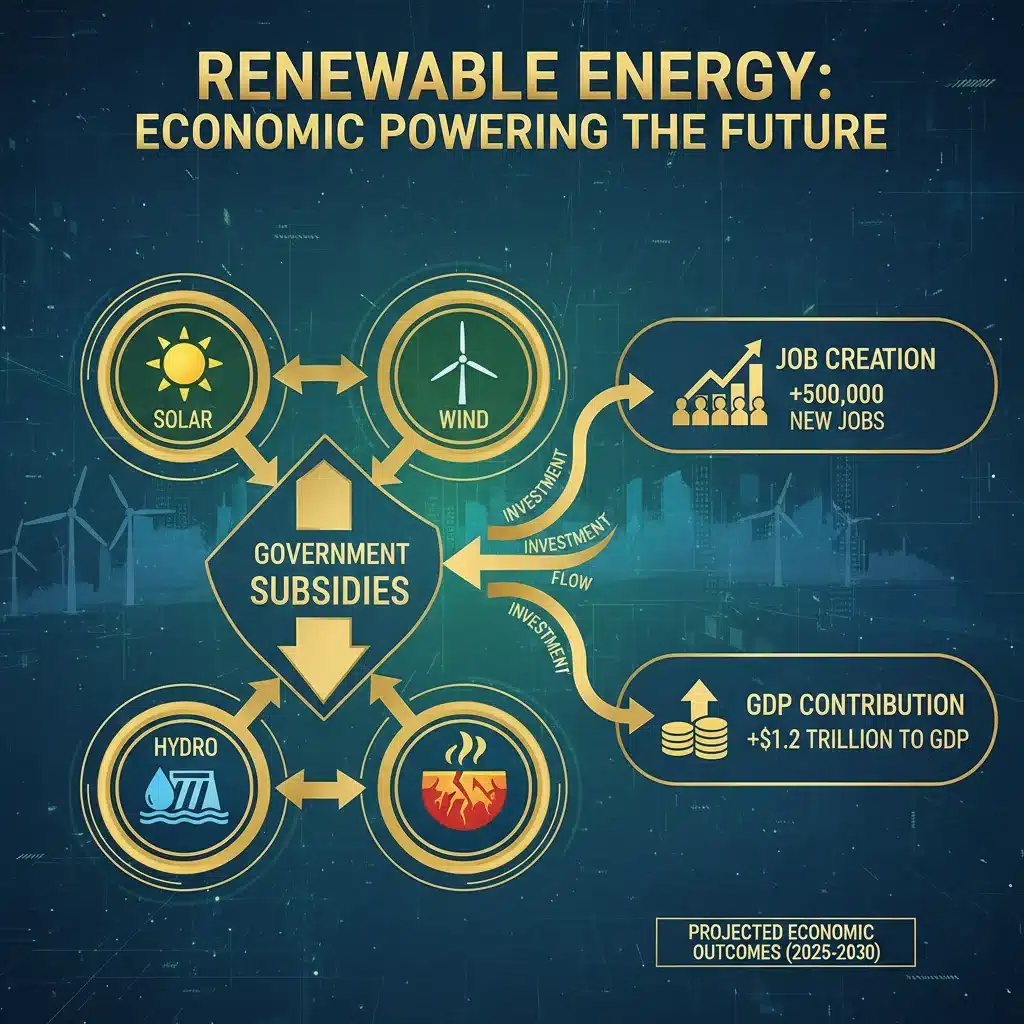
Regarding innovation, the impact is two-fold. On one hand, the removal of certain subsidies could reduce the immediate incentive for incremental improvements in established technologies if the market for these technologies shrinks. On the other hand, it could ignite a new wave of disruptive innovation. Companies might be forced to invest more heavily in research and development to achieve significant cost reductions or performance enhancements that allow them to compete effectively without subsidies. This could accelerate breakthroughs in areas like advanced materials for solar cells, more efficient wind turbine designs, long-duration energy storage, and AI-driven grid management systems. The pressure to innovate will shift from optimizing for subsidy structures to optimizing for genuine market competitiveness.
Moreover, the policy shift might encourage innovation in business models. Companies might explore new financing structures, community-owned renewable projects, or direct power purchase agreements (PPAs) with corporations, bypassing traditional utility structures. The role of government might transition from direct financial support to fostering an environment conducive to innovation through research grants for basic science, regulatory streamlining, and promoting open-source energy technologies. The long-term health and competitiveness of the US renewable energy sector will depend on its ability to adapt and innovate in response to these changes in renewable energy subsidies.
Environmental and Climate Goals in the Balance
The policy shift concerning renewable energy subsidies by 2026 places the United States’ environmental and climate goals in a delicate balance. For years, these subsidies have been a primary tool for accelerating the transition away from fossil fuels, thereby reducing greenhouse gas emissions and combating climate change. The rapid deployment of solar and wind capacity, significantly aided by these incentives, has been a key factor in the US’s progress towards its climate targets, such as those outlined in the Paris Agreement.
A sudden or significant reduction in subsidies could potentially slow down the pace of renewable energy deployment. If the market is not yet fully prepared to absorb the full cost of new projects without governmental support, the rate at which new solar farms, wind turbines, and other green infrastructure are built could decrease. This slowdown would inevitably impact the nation’s ability to meet its emissions reduction targets within the stipulated timelines. A delay in decarbonization could have long-term consequences for environmental health, including air quality, biodiversity, and the frequency and intensity of extreme weather events.
Conversely, proponents of subsidy reform argue that a more market-driven renewable energy sector could ultimately be more sustainable and robust, leading to more enduring environmental benefits. If the industry becomes truly competitive on its own merits, it could achieve a scale and efficiency that far surpasses what is possible under a subsidy-dependent model. This could lead to an even faster and more widespread adoption of clean energy in the long run, once the initial transition period is navigated successfully. The key challenge lies in ensuring that the short-term disruption caused by subsidy withdrawal does not derail the broader, long-term climate objectives. Policymakers must carefully consider the speed and scope of the changes to avoid creating a vacuum that could be filled by higher-emission energy sources.
Furthermore, the nature of future government support could shift. Instead of direct generation subsidies, there might be increased focus on incentives for carbon capture technologies, energy efficiency programs, or sustainable land use practices that complement renewable energy deployment. The effectiveness of the policy shift in achieving environmental goals will therefore depend not just on the removal of existing renewable energy subsidies, but also on the introduction of new, strategically targeted policies that continue to drive decarbonization and environmental protection. The stakes are high, and the decisions made will shape the nation’s environmental future for generations.
Preparing for the New Energy Landscape
As the 2026 deadline for a major policy shift on renewable energy subsidies approaches, various stakeholders must begin preparing for a new energy landscape. For renewable energy companies, this means a rapid re-evaluation of business models, financial strategies, and operational efficiencies. The focus will shift from maximizing subsidy capture to optimizing for market competitiveness. This may involve investing more heavily in R&D to drive down costs, exploring new revenue streams such as energy storage or grid services, and forging stronger partnerships with corporate off-takers through power purchase agreements. Diversification of project portfolios and geographic markets could also help mitigate risks associated with regional policy variations.
Investors will need to adapt their due diligence processes, placing greater emphasis on a project’s intrinsic economic viability rather than its reliance on government incentives. This could lead to a greater demand for transparent financial reporting, robust risk assessments, and a deeper understanding of market dynamics. New financial products and investment vehicles may emerge to cater to a less subsidized, more market-driven renewable energy sector. Private equity, institutional investors, and green bonds could play an increasingly important role in filling the financing gap left by reduced subsidies.
For policymakers, the challenge is to manage this transition gracefully, minimizing disruption while maximizing long-term benefits. This involves clear communication with the industry, providing sufficient lead time for companies to adjust, and potentially phasing out subsidies gradually rather than abruptly. Consideration should also be given to complementary policies that support the growth of renewables in a market-driven environment, such as streamlined permitting processes, investments in grid infrastructure, and continued support for basic energy research. Policies that promote fair competition and address market failures, without being direct subsidies, could also be crucial.
Consumers also have a role to play. Increased awareness of energy choices, understanding the benefits of energy efficiency, and exploring options for distributed energy resources (like rooftop solar) can empower individuals to navigate the changing energy landscape. Ultimately, the success of this policy shift hinges on a collaborative effort from all sectors. The transition away from substantial renewable energy subsidies is not merely an economic adjustment; it is a pivotal moment in the evolution of the US energy system, demanding foresight, adaptability, and a shared commitment to a sustainable future.
Conclusion: Navigating the Future of US Renewable Energy
The impending major policy shift on renewable energy subsidies by 2026 marks a critical juncture for the US economy and its clean energy aspirations. This transition, driven by the maturation of renewable technologies, fiscal considerations, and evolving political priorities, promises to redefine the operational and financial landscape for solar, wind, and other green energy sectors. While the short-term challenges for certain segments of the industry, particularly smaller developers and those heavily reliant on existing incentives, are undeniable, the long-term potential for a more robust, market-driven, and ultimately sustainable renewable energy sector is significant.
The economic impacts will be widespread, creating both opportunities for innovation and efficiency, and necessitating strategic adaptation from businesses and investors. Energy prices and consumer costs will be subject to a delicate balance, with the potential for short-term increases giving way to long-term savings as the industry achieves greater scale and competitiveness. Crucially, the success of this policy shift must be measured not only by economic metrics but also by its ability to keep the United States on track towards its vital environmental and climate goals. A well-managed transition, characterized by clear policy direction, sufficient adaptation time, and complementary support mechanisms, will be paramount.
As the nation moves towards 2026, the discussion around renewable energy subsidies will continue to be a central theme in energy policy debates. The outcomes of these discussions and the subsequent implementation of new policies will determine the pace of decarbonization, the competitiveness of the US energy sector, and the nation’s leadership in the global clean energy transition. Preparing for this new energy landscape requires foresight, flexibility, and a willingness to embrace change across all stakeholders – from government and industry to investors and consumers. The future of US renewable energy is not just about technology; it’s about policy, adaptability, and a collective vision for a sustainable and prosperous tomorrow.