
Navigating ACA 2026 Enrollment: Key Dates, Eligibility, and Subsidy Changes
The Affordable Care Act (ACA), often referred to as Obamacare, continues to be a cornerstone of health coverage for millions of Americans. As we approach 2026, it’s crucial for individuals and families to understand the upcoming changes, particularly regarding enrollment dates, eligibility requirements, and the ever-important subsidy landscape. Staying informed about ACA 2026 Enrollment is not just about compliance; it’s about securing access to vital healthcare services and managing your financial well-being.
The healthcare policy environment is dynamic, with adjustments and updates often reflecting economic trends, public health needs, and legislative priorities. For 2026, several aspects of the ACA are expected to evolve, impacting how millions access affordable health insurance. This comprehensive guide will break down everything you need to know, from the critical open enrollment period to the nuances of financial assistance, ensuring you are well-prepared to make the best healthcare decisions for yourself and your loved ones.
Understanding these changes is paramount. Missing key dates can lead to gaps in coverage, while being unaware of subsidy adjustments might mean you’re paying more than necessary. Our goal is to provide a clear, actionable roadmap for navigating the ACA 2026 Enrollment process, empowering you with the knowledge to secure affordable and comprehensive health insurance.
Understanding the Affordable Care Act (ACA) and Its Purpose
Before diving into the specifics of ACA 2026 Enrollment, let’s briefly revisit the foundational principles of the Affordable Care Act. Enacted in 2010, the ACA aimed to expand health insurance coverage, control healthcare costs, and improve the quality of care for all Americans. It established Health Insurance Marketplaces (exchanges) where individuals and small businesses could shop for insurance plans, often with financial assistance. Key provisions included:
- Guaranteed Issue: Insurers cannot deny coverage or charge more based on pre-existing conditions.
- Essential Health Benefits: Plans must cover a comprehensive set of services, including emergency care, maternity care, prescription drugs, and mental health services.
- Preventive Care: Many preventive services are covered without cost-sharing.
- Employer Mandate: Large employers are required to offer health insurance to their full-time employees.
- Medicaid Expansion: States were given the option to expand Medicaid eligibility to cover more low-income adults.
The ACA has significantly reduced the uninsured rate in the United States, providing a safety net for millions who previously lacked access to affordable health coverage. Its continued evolution, including the upcoming ACA 2026 Enrollment period, reflects ongoing efforts to refine and strengthen the healthcare system.
Anticipated Open Enrollment Dates for ACA 2026
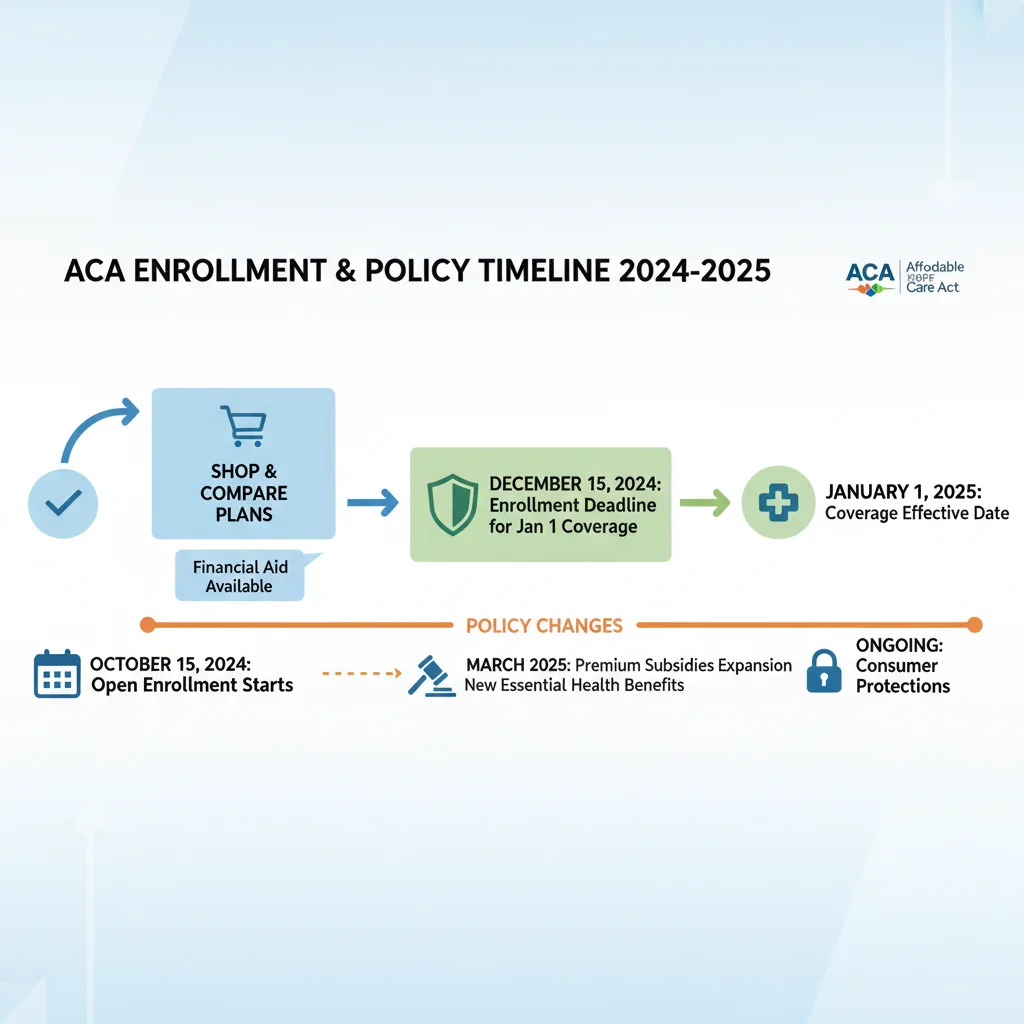
The Open Enrollment Period (OEP) is your annual opportunity to enroll in a new health plan, re-enroll in your current plan, or change plans through the Health Insurance Marketplace. While exact dates for ACA 2026 Enrollment are typically finalized closer to the period, based on historical patterns, we can anticipate the following:
- Start Date: November 1, 2025
- End Date: January 15, 2026
It’s crucial to mark these dates on your calendar. Enrolling by December 15, 2025, usually ensures your coverage begins on January 1, 2026. If you enroll between December 16, 2025, and January 15, 2026, your coverage will typically start on February 1, 2026. These deadlines are inflexible unless you qualify for a Special Enrollment Period (SEP).
Why These Dates Matter for ACA 2026 Enrollment
Missing the Open Enrollment Period means you generally cannot sign up for health insurance through the Marketplace for the upcoming year unless you experience a qualifying life event. This could leave you without essential coverage, making understanding and adhering to these deadlines a top priority for anyone considering ACA 2026 Enrollment.
Who is Eligible for ACA Coverage in 2026?
Eligibility for health insurance through the ACA Marketplace generally remains consistent, but it’s always good to review the criteria for ACA 2026 Enrollment:
- You must live in the United States.
- You must be a U.S. citizen or national, or be lawfully present.
- You cannot be incarcerated.
- You must not be eligible for Medicare.
Individuals who have access to affordable health coverage through an employer or who are eligible for Medicaid typically won’t qualify for subsidies through the Marketplace, though they can still purchase plans at full price. However, there are exceptions, especially if employer-sponsored coverage is deemed unaffordable or doesn’t meet minimum value standards.
Special Enrollment Periods (SEPs)
Even outside the main ACA 2026 Enrollment period, certain life events can trigger a Special Enrollment Period (SEP), allowing you to sign up for or change your health plan. These events include:
- Losing existing health coverage (e.g., job loss, divorce, aging off a parent’s plan).
- Changes in household size (e.g., marriage, birth or adoption of a child).
- Moving to a new area that offers different health plan options.
- Changes in income that affect your eligibility for subsidies.
- Becoming a U.S. citizen.
- Leaving incarceration.
It’s crucial to report these changes to the Marketplace promptly, as SEPs usually have a limited window (often 60 days) from the date of the qualifying event.
Key Changes to Subsidy Eligibility for ACA 2026 Enrollment
One of the most significant aspects of ACA 2026 Enrollment will be the potential changes to subsidy eligibility. The Inflation Reduction Act (IRA) of 2022 extended enhanced ACA subsidies through 2025. This means that for 2026, unless Congress takes further action, these enhanced subsidies are set to expire. The expiration could have a substantial impact on the affordability of health insurance for millions of Americans.
What are Enhanced Subsidies?
Before the enhanced subsidies, financial assistance (Premium Tax Credits, PTCs) was primarily available to individuals and families earning between 100% and 400% of the Federal Poverty Level (FPL). The enhanced subsidies, first introduced by the American Rescue Plan Act (ARPA) in 2021 and extended by the IRA, made two critical changes:
- Elimination of the 400% FPL Subsidy Cliff: Previously, individuals earning just over 400% FPL were ineligible for any subsidies, leading to a sharp increase in premium costs. The enhanced subsidies removed this cliff, ensuring that no one pays more than 8.5% of their household income for a benchmark silver plan, regardless of their FPL.
- Increased Subsidy Amounts: For those already eligible, the enhanced subsidies reduced the percentage of income individuals had to contribute towards their premiums. This resulted in lower out-of-pocket costs for many enrollees.
The Impact of Potential Expiration on ACA 2026 Enrollment
If the enhanced subsidies are not extended beyond 2025, here’s what could happen for ACA 2026 Enrollment:
- Return of the 400% FPL Cliff: Individuals and families earning above 400% FPL could once again face significantly higher premiums without any financial assistance.
- Higher Premiums for Many: Those currently receiving enhanced subsidies below 400% FPL would likely see their premium contributions increase, as the percentage of income they are expected to pay towards a benchmark plan would revert to pre-ARPA levels.
- Increased Uninsured Rate: The rise in costs could make health insurance unaffordable for some, potentially leading to an increase in the number of uninsured Americans.
It is imperative for individuals to monitor legislative developments closely as the ACA 2026 Enrollment period approaches. Advocacy groups and policymakers are actively discussing the possibility of extending these subsidies, recognizing their critical role in making healthcare affordable.

How to Determine Your Subsidy Eligibility for ACA 2026
Determining your eligibility for financial assistance during ACA 2026 Enrollment will depend on several factors, primarily your household income and household size. Even if the enhanced subsidies expire, Premium Tax Credits (PTCs) will still be available for those within certain income brackets.
Key Factors for Subsidy Eligibility:
- Household Income: This is your Modified Adjusted Gross Income (MAGI), which includes most taxable income sources. The Marketplace uses your estimated MAGI for the year you want coverage (e.g., 2026) to determine your eligibility.
- Household Size: This includes you, your spouse (if you file jointly), and anyone you claim as a tax dependent.
- Access to Other Coverage: If you or a family member have access to affordable health coverage through an employer or are eligible for Medicare or Medicaid, it can affect your eligibility for Marketplace subsidies.
Calculating Your Estimated MAGI for ACA 2026 Enrollment
To estimate your MAGI for 2026, consider:
- Your gross income from all sources (wages, self-employment, Social Security benefits, etc.).
- Any deductions you plan to take (e.g., student loan interest, self-employment tax deductions, IRA contributions).
The Marketplace website (HealthCare.gov or your state’s exchange) provides tools to help you estimate your income and check for eligibility. It’s vital to provide accurate income projections, as discrepancies can lead to tax reconciliation issues later.
Understanding the Federal Poverty Level (FPL)
Subsidy eligibility is benchmarked against the Federal Poverty Level (FPL). The FPL numbers are updated annually. For ACA 2026 Enrollment, you’ll be looking at the 2025 FPL numbers, which are typically released early in the year. Historically, subsidies have been available for those between 100% and 400% FPL, with the enhanced subsidies extending assistance beyond 400% FPL. If these enhancements expire, the 400% FPL cap will become highly relevant again.
Preparing for ACA 2026 Enrollment: A Checklist
Proactive preparation can make your ACA 2026 Enrollment process smooth and stress-free. Here’s a checklist to guide you:
- Gather Your Documents: Have your social security numbers (or document numbers for lawful immigrants), employer and income information for all household members, and current health insurance policy numbers readily available.
- Estimate Your 2026 Income: This is perhaps the most critical step for subsidy eligibility. Be as accurate as possible, considering any anticipated job changes, raises, or other income fluctuations.
- Review Your Household Information: Confirm your household size, including any dependents you plan to claim.
- Research Plan Options: Even before Open Enrollment begins, you can research the types of plans available (HMO, PPO, EPO, POS) and understand key terms like deductibles, copayments, coinsurance, and out-of-pocket maximums.
- Check for Local Assistance: Many communities offer free, in-person assistance from navigators or certified application counselors who can help you understand your options and complete the enrollment process.
- Stay Informed: Keep an eye on news from HealthCare.gov, state exchanges, and reputable healthcare news outlets for any legislative updates regarding the extension of enhanced subsidies or other policy changes affecting ACA 2026 Enrollment.
Choosing the Right Health Plan during ACA 2026 Enrollment
Selecting a health plan is a highly personal decision. During ACA 2026 Enrollment, you’ll encounter various plan categories, each offering different levels of coverage and cost-sharing:
- Bronze Plans: Have low monthly premiums but high deductibles and out-of-pocket costs. They cover about 60% of healthcare costs, with you paying 40%.
- Silver Plans: Offer moderate premiums and deductibles. They cover about 70% of healthcare costs, with you paying 30%. This is the only plan type eligible for Cost-Sharing Reductions (CSRs) if you qualify.
- Gold Plans: Feature high monthly premiums but low deductibles and out-of-pocket costs. They cover about 80% of healthcare costs, with you paying 20%.
- Platinum Plans: Have the highest monthly premiums but the lowest deductibles and out-of-pocket costs. They cover about 90% of healthcare costs, with you paying 10%.
- Catastrophic Plans: Available to individuals under 30 or those with a hardship exemption. They have very low premiums but extremely high deductibles and are designed to protect against worst-case scenarios.
Considerations When Choosing a Plan:
- Your Health Needs: If you anticipate frequent doctor visits or have chronic conditions, a Gold or Platinum plan might save you money in the long run despite higher premiums. If you’re generally healthy and prefer lower monthly costs, a Bronze or Silver plan might be suitable.
- Your Budget: Balance your monthly premium tolerance with your ability to pay deductibles and other out-of-pocket costs.
- Doctor and Hospital Networks: Ensure your preferred doctors, specialists, and hospitals are in the plan’s network.
- Prescription Drug Coverage: Check the plan’s formulary to ensure your necessary medications are covered and what tier they fall under.
- Cost-Sharing Reductions (CSRs): If your income is below 250% FPL and you choose a Silver plan, you may qualify for CSRs, which lower your deductibles, copayments, and out-of-pocket maximums. This makes Silver plans significantly more valuable for eligible individuals.
The Role of State-Based Marketplaces in ACA 2026 Enrollment
While HealthCare.gov serves as the federal Marketplace for many states, several states operate their own State-Based Marketplaces (SBMs). These SBMs have their own websites and may have slightly different enrollment deadlines or plan offerings. For ACA 2026 Enrollment, it’s essential to know whether your state uses HealthCare.gov or operates its own exchange. Examples of states with SBMs include California (Covered California), New York (NY State of Health), and Washington (Washington Healthplanfinder).
Regardless of whether you use a federal or state exchange, the core principles of the ACA, including guaranteed issue and essential health benefits, remain consistent. However, SBMs often have more flexibility in designing their programs and may offer additional state-specific subsidies or consumer protections. Always confirm the specific details for your state when planning for ACA 2026 Enrollment.
Potential Future of the ACA Beyond 2026
The landscape of healthcare policy is constantly evolving. While our focus is on ACA 2026 Enrollment, it’s worth considering the broader political and legislative discussions surrounding the Affordable Care Act. Debates about its future, including potential modifications, expansions, or even repeals, are ongoing. These discussions often center on:
- Affordability: The cost of premiums and out-of-pocket expenses remains a significant concern for many.
- Access: Ensuring that all Americans have access to quality healthcare.
- Coverage Gaps: Addressing areas where the ACA may not fully meet the needs of all populations.
- Medicaid Expansion: Efforts to encourage more states to expand Medicaid.
- Prescription Drug Costs: Legislation aimed at lowering the cost of medications.
The outcome of elections and changing legislative priorities can significantly impact the ACA’s trajectory. Staying informed about these broader conversations can help you anticipate future changes and plan your healthcare strategy beyond ACA 2026 Enrollment.
Conclusion: Empowering Your ACA 2026 Enrollment Journey
The ACA 2026 Enrollment period represents a critical opportunity to secure or renew your health insurance coverage. With the potential expiration of enhanced subsidies, understanding the nuances of eligibility and financial assistance becomes even more vital. By marking key dates, accurately estimating your income, and carefully reviewing your plan options, you can navigate the process with confidence.
Remember, health insurance is not just a regulatory requirement; it’s an investment in your health and financial security. A well-chosen plan provides peace of mind, access to necessary medical care, and protection against unforeseen health crises. Don’t wait until the last minute to prepare for ACA 2026 Enrollment. Start gathering your information, researching your options, and seeking assistance if needed. Your proactive approach today will ensure you have the coverage you need for tomorrow.
For the most up-to-date information, always refer to the official Health Insurance Marketplace website (HealthCare.gov) or your state’s specific health exchange. These resources will provide the definitive details regarding enrollment dates, plan availability, and subsidy eligibility as they are finalized for 2026.